
Police Cardiac and Stroke Screening at Your Department
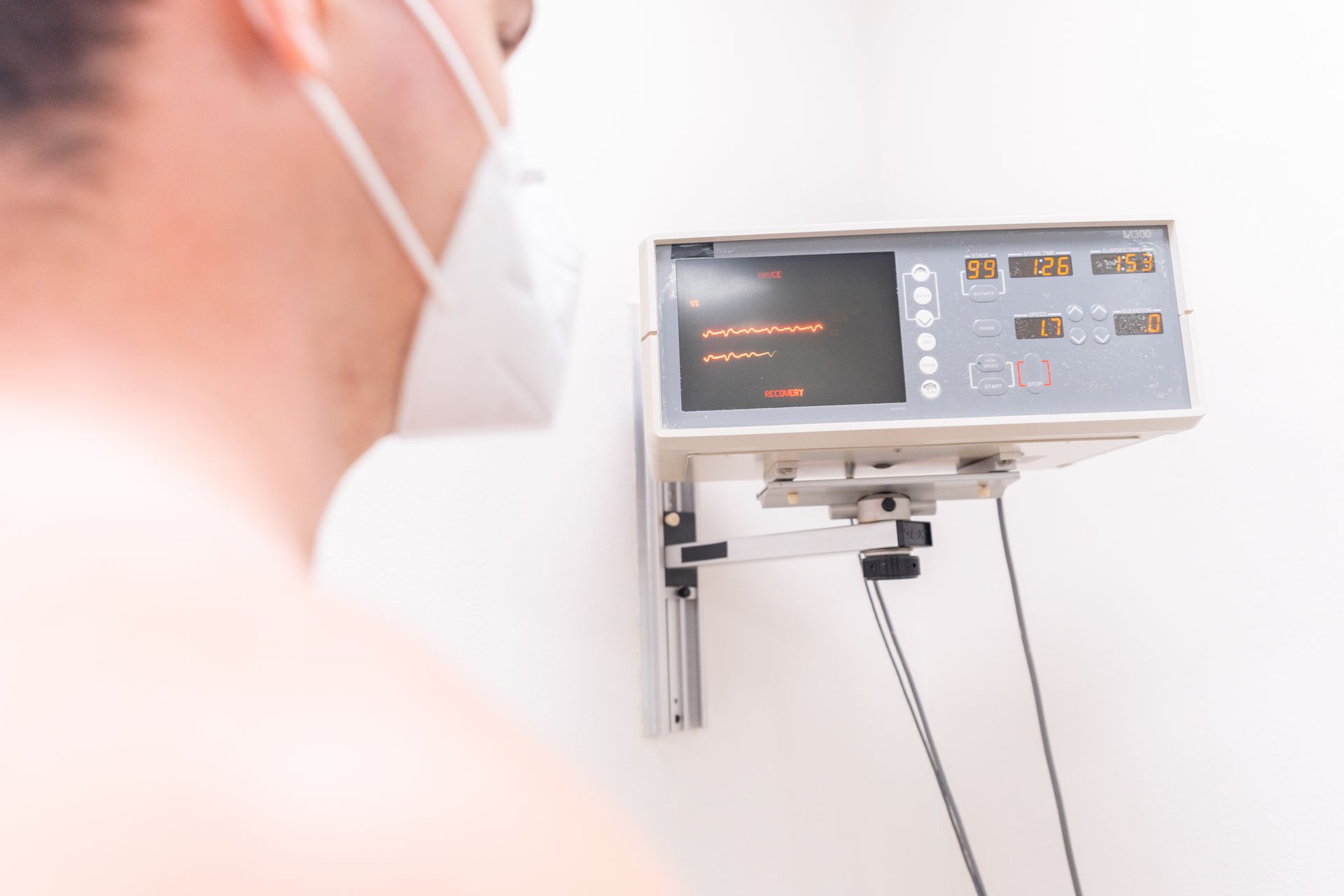
The Danger Shows Up Under Exertion
Officers spend hours at low activity and then go from sitting to sprinting in seconds. Research published in the BMJ found sudden cardiac death risk was 34 to 69 times higher during restraints and altercations than during routine duty. Police cardiac screening exists because that moment does not create heart disease. It exposes disease that was already there and never produced a symptom.
That is the whole problem: a heart in trouble can look fine at rest.
What Makes Our Approach Different
Physician-Led Care
Every screening is conducted by healthcare professionals and reviewed by physicians who explain the results in person and provide personalized recommendations for follow-up care. Your people meet a clinician, not a kiosk.
Comprehensive Testing
From cancer screening to cardiovascular health, we test for the specific risks your workforce carries. A visit can include a full physical, a 12-lead EKG, comprehensive blood work, and a skin review.
Built for Your Schedule
We work around your shifts and your site. Mobile wellness clinics set up in your parking lot, at your plant, or at your station, and reach first, second, and third shift.
Customized to Your Needs
Every organization is different. We design your screening program with you, whether you run a plant, a fire department, or a police department, built around your specific concerns and budget.
Trusted by Departments
and Organizations Nationwide


What a Full Cardiac Workup Actually Involves
Each officer receives a 12-lead EKG to read the heart's electrical activity, a stress test with VO2 max to measure cardiac capacity under exertion, and an echocardiogram to image the heart's structure and function. Comprehensive blood work covers cholesterol, glucose, and the metabolic markers that drive both cardiac and stroke risk.
Screened on Watch, Not on a Rest Day
We bring a mobile wellness clinic to your department and run testing across every watch. No officer books an appointment, drives to a cardiology practice, or gives up a rest day to be evaluated. Departments that screen on site get most of the roster through. Departments that send officers out get whoever had time.
Who Should Be Screened, and How Often
Every sworn officer benefits, and the case strengthens with age, years of service, and any family history of cardiac disease. Research on police mortality has consistently found circulatory disease deaths concentrated among officers with longer service. Annual evaluation is the common standard.
Confidential, and Followed Through
A physician reviews every result with the officer directly. Results stay confidential between the officer and the clinician, which is the reason officers actually participate. When a finding needs attention, we coordinate the referral and the follow-up, so an abnormal echo becomes a cardiology appointment rather than a worry someone sits on.
Frequently Asked Questions
What is police cardiac screening?
Police cardiac screening is a cardiovascular evaluation built around the specific demands of law enforcement. It typically combines a 12-lead EKG, a stress test measuring capacity under exertion, an echocardiogram, and comprehensive blood work, to identify heart disease before it surfaces during a physically demanding call.
What is a stress echo?
A stress echocardiogram, or stress echo, images the heart with ultrasound at rest and again immediately after peak exercise. Comparing the two reveals wall motion abnormalities, where a section of heart muscle is not receiving enough blood. It can detect coronary artery disease that looks completely normal at rest.
How is a stress echo test different from a regular stress test?
A standard stress test tracks the heart's electrical activity on EKG during exercise. A stress echo adds ultrasound imaging before and after exertion, so a clinician can see how the heart muscle actually moves under load. It uses sound waves, so there is no radiation exposure.
Does this screening address stroke risk?
The evaluation identifies the major modifiable drivers of stroke risk, including high blood pressure, cholesterol, and blood glucose, alongside cardiac findings that carry stroke implications such as atrial fibrillation. Blood pressure and lipids are the risk factors most worth catching early.
What is the police officer mortality rate?
Research on police mortality has consistently found elevated all-cause and cardiovascular death rates compared with the general population. One widely cited 2013 study of Buffalo officers reported a mean life expectancy difference of 21.9 years, with a range of roughly 14 to 29 years.
Can NDS Wellness test officers at our department?
6. Can NDS Wellness test officers at our department?
Yes. We bring a mobile wellness clinic to your department and evaluate officers across every watch, so nobody travels or gives up a rest day. A physician conducts the assessment, explains the findings in person, and coordinates any follow-up care that is needed.