Full body scans have gone from a fringe idea to a wellness status symbol, and employers are starting to field the question: should we offer these to our people? The marketing is compelling, a single scan that looks everywhere for cancer and disease before symptoms appear. The medical evidence tells a more complicated story. Major radiology organizations do not recommend whole body screening for healthy people, and the reasons matter for any employer weighing the cost. Here is what the evidence actually says, where these scans do and do not make sense, and a more targeted approach to workforce screening that holds up.
Key Insights
- Major radiology bodies advise against routine full body scans: The American College of Radiology does not recommend total body screening for people without symptoms, risk factors, or relevant family history, citing no documented evidence it prolongs life.
- Almost everyone gets an abnormal result: A 2025 Fred Hutchinson Cancer Center review of 12 studies found roughly 95 percent of asymptomatic adults had at least one abnormal finding on whole body MRI, and about 91 percent of those findings were not clinically relevant.
- False positives carry real cost: Ambiguous findings trigger follow-up scans, biopsies, anxiety, and expense, most of which turn out to be unnecessary.
- The scans do make sense for high-risk groups: The same organizations support whole body MRI for people with specific hereditary cancer syndromes, where the benefit is documented.
- Targeted screening beats scanning everything: For a general workforce, screening matched to actual risk finds what matters without the cascade of false alarms a whole body scan produces.
What a Full Body Scan Actually Is
Before weighing the value, it helps to be clear on what these scans are and what they are not, since the category covers several different technologies.
The Common Types
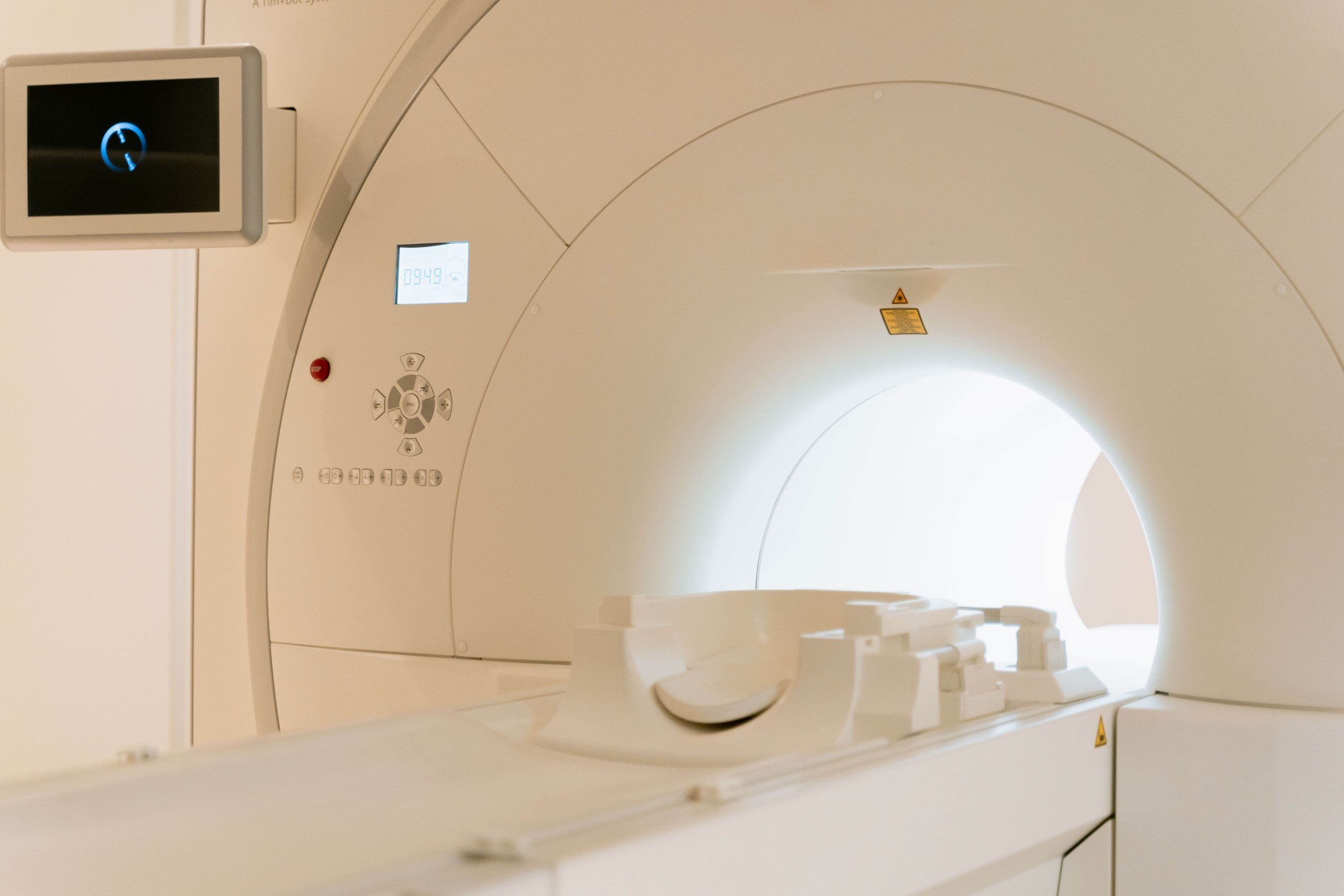
Most consumer full body scans today are whole body MRI, which uses magnetic fields and radio waves to image the body from head to mid-thigh. Others use CT, which involves ionizing radiation, and some newer services use ultrasound. They are marketed as a way to detect cancer and other conditions early, typically cost in the range of a couple thousand dollars, and are generally not covered by insurance.
What They Promise Versus What They Deliver
The promise is early detection across the whole body in one sitting. The reality is that finding something and finding something useful are different outcomes. A scan of a healthy person tends to surface a large number of spots, nodules, and cysts, the overwhelming majority of which are harmless. Sorting the meaningful from the meaningless is where the trouble begins.
What the Medical Evidence Says
This is where employer decisions should start, because the gap between marketing and evidence is wide and well documented.
The Position of Major Radiology Bodies
The American College of Radiology, in a 2023 statement, said it does not believe there is sufficient evidence to justify recommending total body screening for patients with no clinical symptoms, risk factors, or family history suggesting underlying disease. It went further, noting that to date there is no documented evidence that total body screening is cost-efficient or effective in prolonging life. The American Academy of Family Physicians offers similar guidance, extending it to whole body CT and PET scanning.
The Numbers Behind the Caution
The core problem is that healthy bodies are full of harmless anomalies. A 2025 review by the Fred Hutchinson Cancer Center, covering 12 studies, found that roughly 95 percent of asymptomatic adults had at least one abnormal finding on whole body MRI, while about 91 percent of those findings were not clinically relevant. In other words, nearly everyone gets flagged, and the vast majority of flags mean nothing. The paradox is simple: the more you look, the more you find, but not everything you find is worth knowing.
The Real Costs Employers Should Weigh
A wellness benefit is supposed to help. A full body scan program can generate harm and cost that are easy to overlook when only the sticker price is considered.
The Cascade of Follow-Up
An ambiguous finding rarely ends with the scan. It leads to more imaging, specialist visits, and sometimes biopsies, most of which confirm nothing was wrong. Each step carries its own cost, its own risk, and its own time away from work. For an employer footing the bill or carrying the insurance risk, a single scan can be the start of an expensive chain.
The Human Cost of a False Alarm
There is also the toll on the employee. Being told about a finding of uncertain significance, then waiting weeks for follow-up, is a genuine source of stress. A wellness perk that leaves people anxious about a spot that never needed attention is not the outcome most employers intend when they offer it.
When Full Body Scans Do Make Sense
The evidence is not a blanket dismissal, and a fair guide has to say where these scans earn their place.
High-Risk Individuals
For people with certain hereditary cancer syndromes, such as Li-Fraumeni syndrome, whole body MRI is formally recommended, and studies show meaningfully higher cancer detection in these groups. The difference is that these individuals carry a known, elevated, specific risk. The scan is targeted at a real problem rather than searching a healthy body for anything unusual.
The Lesson for Employers
That distinction is the whole point. Screening delivers value when it is matched to actual risk, and generates noise when it is not. A general workforce is not a high-risk cancer-syndrome population, which is exactly why blanket scanning tends to produce more false alarms than answers. The better question is not whether to scan everyone, but how to screen for the risks a specific workforce actually carries.
A More Targeted Approach to Workforce Screening
The alternative to scanning everything is screening for what matters, guided by a physician and matched to the people being screened.
Screening Built Around Real Risk
Most of what threatens a working population is not exotic. It is cardiovascular disease, metabolic conditions, and the cancers tied to age and occupation. A focused screening program looks for these directly through a physical exam, a 12-lead EKG, comprehensive blood work, and cancer screening matched to the workforce, which detects meaningful problems without generating a pile of incidental findings that lead nowhere.
Why a Physician Matters
The difference between a useful result and an anxious one is often the person interpreting it. A physician can place a finding in context, distinguish what needs action from what does not, and coordinate real follow-up when something warrants it. That judgment is precisely what a mail-order scan report cannot provide, and it is what keeps screening from turning into a source of unnecessary alarm.
How NDS Wellness Screens Your Workforce
NDS Wellness takes the targeted approach through our corporate wellness program. Rather than scanning everyone for everything, we deliver physician-led screening matched to the risks your workforce actually carries: a full physical, a 12-lead EKG, comprehensive blood work, and a skin review, with cancer and cardiac screening focused where it counts. A physician explains every result in person and coordinates follow-up when a finding needs it, so employees get answers rather than ambiguity.
Because we arrive in a mobile wellness clinic and screen across every shift, the whole team gets access without anyone traveling or taking time off. It is a practical, evidence-based alternative to an expensive scan, and it pairs naturally with the thinking in our guide to how often employees actually need a check-up.