Most corporate wellness vendor comparisons are useless because every vendor answers every question with yes. Do you offer biometric screening? Yes. Do you support multiple sites? Yes. Is it physician-led? Yes, in a sense, if you do not ask what that means.
The questions below are built differently. Each one has an answer that genuinely varies between providers, and each one has a follow-up that makes a vague answer impossible to maintain. Work through them and the field separates quickly.
This is written for whoever owns the decision: an HR director, a benefits manager, a safety lead, or an operations head who inherited wellness because nobody else wanted it.
Key Insights
- Delivery model is the first fork: a vendor that sends people to your site and a vendor that sends your employees a login are not competitors, they are different products.
- Physician-led means something specific: ask who interprets results and whether an employee ever speaks to a clinician. Many programs are technician-delivered with no clinical conversation at all.
- Shift coverage is where most programs quietly fail: a weekday daytime clinic reaches a fraction of a multi-shift workforce and misses the same crews every year.
- Participation rate is the only metric that matters early: a comprehensive panel at 20 percent participation finds less than a basic panel at 80 percent.
- There is no EEOC incentive cap in force: the 2016 limits were vacated in court and the relevant regulation sections now read as reserved, though the voluntariness requirement at 29 CFR 1630.14(d)(2) remains fully in effect.
First, Decide What You Are Actually Buying
The phrase corporate wellness covers at least four distinct products, and confusing them is the most common and most expensive mistake in this category.
A platform. Software. Challenges, step tracking, content libraries, sometimes coaching by chat. Employees log in. No clinical measurement takes place. These are often the cheapest per employee and the easiest to deploy.
A screening provider. Clinical measurement of actual health markers, delivered either on-site or through a lab network. Produces data about the health of your workforce. This is the category NDS Wellness sits in.
A benefits navigator. Helps employees use the health plan they already have. Valuable, but a different problem.
A full-service wellness administrator. Bundles several of the above, often with incentive administration attached.
Decide which of these you need before you take a single demo. If your actual goal is to find out what is going on in your workforce, a platform will not do it however good the interface is. If your goal is engagement and culture, a screening provider is not the right tool on its own.
If you have not yet settled the goal, our guide on how to start a corporate wellness program works through that sequencing first.
The Delivery Model Question
Ask: where does the screening physically happen, and who travels?
Three models exist. The vendor brings a clinic to your site. Your employees go to a retail or lab location using a voucher. Or employees order a kit and collect a sample at home.
These produce very different participation rates, and participation is the variable that decides everything downstream. A screening that requires an employee to book an appointment, travel, and spend personal time reaches the people who were already engaged with their health. The employees carrying undetected risk are disproportionately the ones who will not make that trip, which is an uncomfortable inversion: the harder the program is to attend, the more it selects against the people it most needs to reach.
The follow-up question: what participation rate do your comparable clients actually achieve, and how is that calculated? Ask whether the denominator is total headcount or employees who opted in. Those are wildly different numbers and vendors are not always careful about which they quote.
The Shift Coverage Question
Ask: can you screen across all shifts, including overnight, and have you done it?
If your organization runs anything other than a single day shift, this question eliminates more vendors than any other. A clinic that operates nine to five on weekdays reaches first shift and systematically misses second and third. Not randomly. The same crews, every year.
This matters more than it sounds, because shift workers are not a neutral slice of the workforce from a health standpoint. Rotating and night schedules are associated with elevated cardiovascular and metabolic risk, which means the group your program misses is the group carrying the most risk. We cover that in our article on how shift work affects health.
The follow-up question: ask for a sample schedule from a multi-shift client. A vendor who does this routinely can produce one. A vendor who says yes in principle will not.
The Physician-Led Question
Ask: who interprets the results, and does an employee ever speak to a clinician?
Almost every vendor describes their program as physician-led, and the phrase has been worn smooth. It can mean a physician designed the panel, or a physician is available by phone if something is badly wrong, or a physician is physically present and examining people. Those are three different services at three different price points.
The practical test is what happens to an employee with an abnormal result. In a technician-delivered model, that employee gets a printout, possibly by mail, possibly a week later, with a recommendation to see their doctor. In a physician-led model, a clinician explains the finding at the time, answers questions, and arranges follow-up.
The difference is not academic. A number on a page that an employee does not understand produces no action. A short conversation with a clinician who says what the number means and what to do next produces considerably more.
The follow-up question: what credential does the person physically on site hold, and what happens in the first 48 hours after a critical finding?
The Panel Depth Question
Ask: exactly what is measured, and what is not?
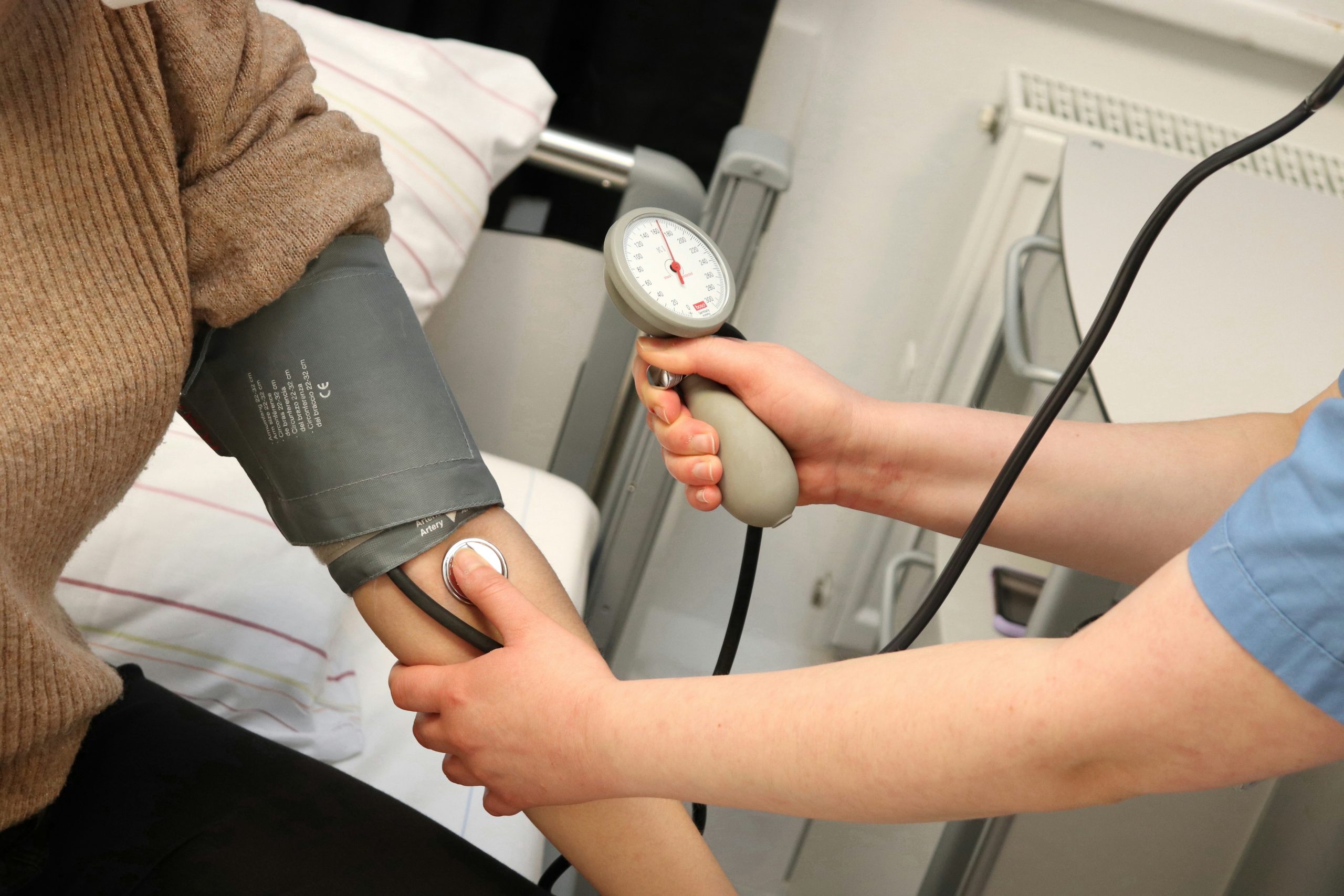
Get the specific list rather than a category name. A basic panel is blood pressure, a lipid panel, glucose or A1C, and body measurements. That is a reasonable foundation and covers the cluster described in our explainer on what a biometric screening is.
Beyond that, programs vary widely. Some add a full physical examination. Some add a 12-lead EKG. Some add ultrasound imaging. Each addition changes what the screening can find and what it costs.
Be equally interested in the honest answer about limits. A vendor who tells you plainly that screening does not replace age-appropriate screening such as colonoscopy, and that no panel catches everything, is more trustworthy than one who implies comprehensive coverage. Our piece on whether full body scans are worth it for employers works through where the marketing claims in this category outrun the evidence.
The follow-up question: ask what the panel does not cover, and listen to how comfortable they are answering.
The Data and Privacy Question
Ask: what exactly do we receive as the employer, and what do employees receive?
The correct answer is that employees get their individual results and the employer gets de-identified aggregate reporting. Anything else is a problem.
Beyond that, get specifics on the aggregate report. How is it segmented, how small can a group get before suppression kicks in, and can you see year-over-year movement. A report showing that 31 percent of participants fell into Stage 1 hypertension or higher is actionable. A report saying wellness engagement was strong is not.
On the legal frame, the voluntariness requirement at 29 CFR 1630.14(d)(2) is in force: you cannot require participation, deny or limit coverage for declining, retaliate, or coerce, and you must provide a notice. Parallel protections for genetic information including family medical history sit at 29 CFR 1635.8.
A point many vendors state incorrectly: there is currently no EEOC cap on wellness incentives. The 2016 rules set one, a federal court vacated those provisions in AARP v. EEOC, and the incentive sections of both regulations now read as reserved. A vendor confidently quoting a 30 percent limit as current law is working from outdated material, which tells you something about how closely they follow this area. Confirm your own obligations with employment counsel rather than with a vendor.
The Follow-Through Question
Ask: what happens after an abnormal result?
This separates a screening event from a screening program. Three answers are possible and they are not equivalent.
The weakest is a recommendation on the results sheet to consult a physician. The middle option is a phone call from the vendor to the employee. The strongest is a coordinated referral into actual care with the loop closed.
Ask what proportion of flagged employees complete a follow-up appointment. Most vendors do not track this. The ones who do are telling you something about how they define their job.
The Scale and Logistics Questions
Ask about minimum headcount, geographic coverage, lead time, and space requirements.
Minimums matter if you have sites of varying size, because a vendor with a 200-employee floor cannot serve your 40-person facility and you will end up running two programs. Geographic coverage matters if you are multi-state, since a regional provider means different vendors, different panels, and aggregate data that cannot be combined. Lead time matters because booking a mobile clinic is not the same as switching on a platform. Space matters more than people expect: ask what the vendor actually needs on site, and whether they can work out of a mobile unit in the car park if you have nowhere to put them.
How NDS Wellness Answers These Questions
We think the questions above are the right ones to ask any vendor in this category, including us. Here are our answers.
NDS Wellness is a screening provider, not a platform. We bring a mobile wellness clinic to your site and deliver physician-led screening across first, second, and third shift. A physician is present. Employees have their results explained in person rather than mailed, and findings that need follow-up are referred rather than noted. Employers receive aggregate reporting on workforce health. Individual results remain confidential between employee and clinician.
Our corporate wellness program is built around on-site biometric screening, and we operate across 33 states. You can see how this works in practice in our manufacturing case study.