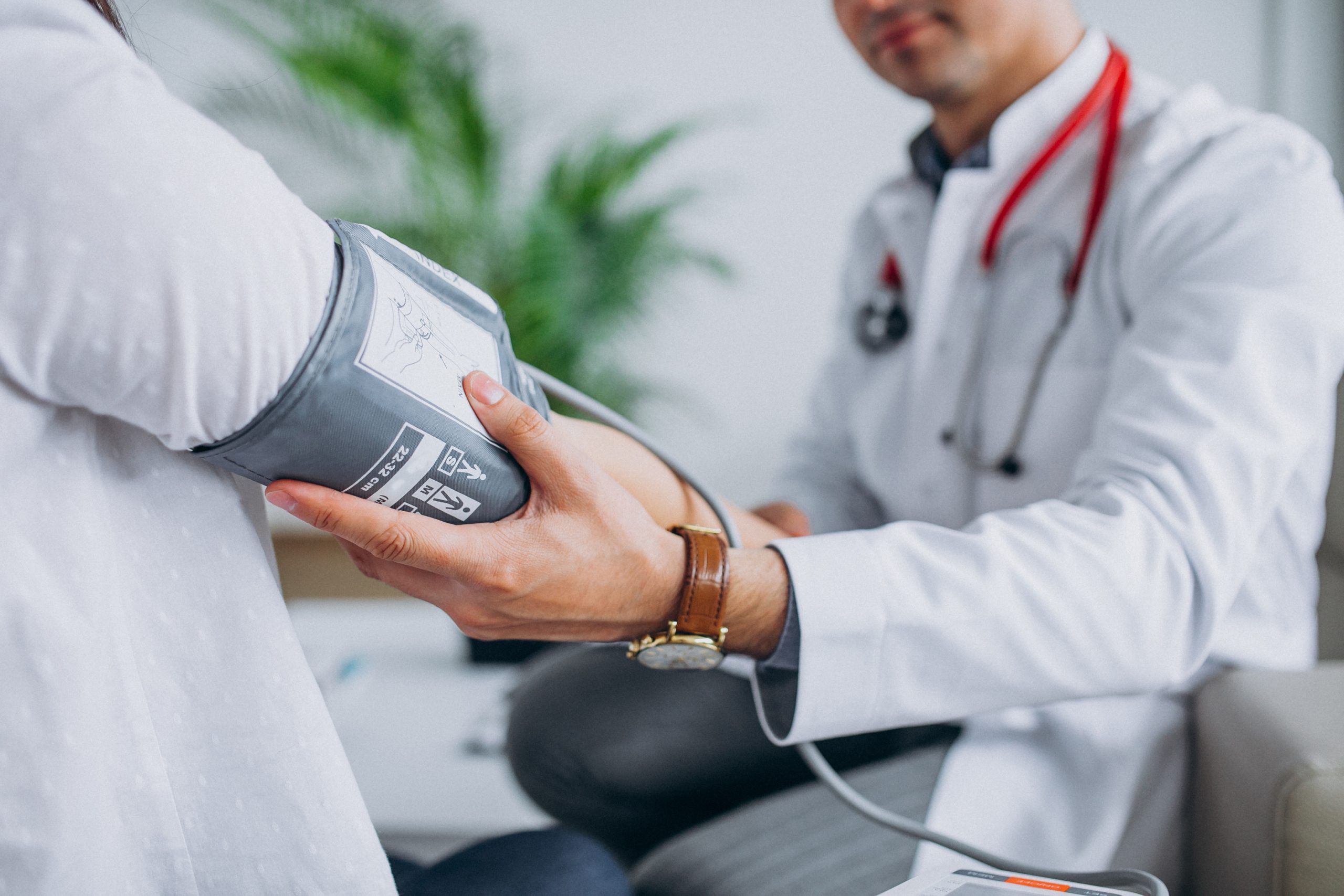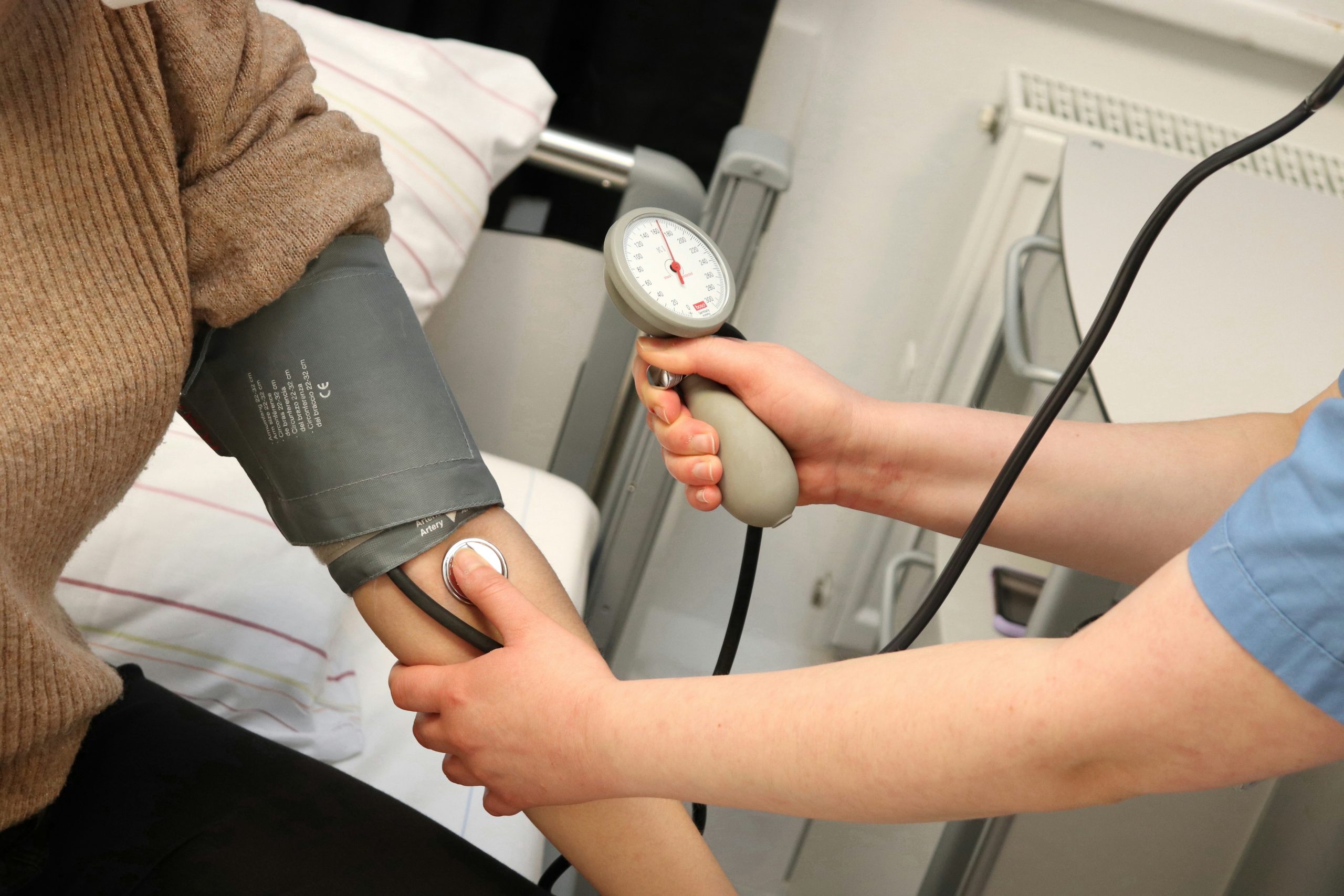
Of everything a workplace health program can measure, blood pressure returns the most information for the least effort. It takes about two minutes. It needs no fasting, no needle, and no laboratory. And it finds a condition that roughly half of American adults have and that most of them cannot feel.
That last point is the whole argument. The CDC states plainly that high blood pressure usually has no warning signs or symptoms, and many people do not know they have it. There is no version of this where an employee notices something is wrong and books an appointment. The only way it gets found is if somebody measures it.
This article covers what the readings mean, why a single high number is not a diagnosis, what workplace screening catches that annual physicals miss, and what should happen after an elevated result.
Key Insights
- Nearly half of US adults have high blood pressure: the CDC puts it at 48.1 percent, about 119.9 million people, with only 22.5 percent controlled.
- The condition is symptomless until it is not: damage to the heart, brain, kidneys, and eyes accumulates silently, which is why measurement is the only detection method.
- One high reading is not a diagnosis: position, recent caffeine, cuff size, and the measurement situation itself all move the number. Confirmation requires repeat measurement.
- Access decides who gets screened: a measurement that requires a day off reaches the employees who were already going to a physician anyway.
- A reading without a referral pathway changes nothing: the value of screening sits in what happens after an elevated result, not in the act of taking it.
What the Numbers Actually Mean
A blood pressure reading gives two figures. Systolic, the upper number, is the pressure in your arteries when the heart contracts. Diastolic, the lower number, is the pressure between beats when the heart refills.
The American Heart Association sorts readings into these categories:
- Normal: less than 120 systolic and less than 80 diastolic.
- Elevated: 120 to 129 systolic and less than 80 diastolic.
- Stage 1 hypertension: 130 to 139 systolic or 80 to 89 diastolic.
- Stage 2 hypertension: 140 or higher systolic, or 90 or higher diastolic.
- Severe hypertension: higher than 180 systolic and/or higher than 120 diastolic, without symptoms. Contact a healthcare professional.
- Hypertensive emergency: the same numbers accompanied by chest pain, shortness of breath, back pain, numbness, weakness, vision change, or difficulty speaking. Call 911.
Two things are worth noticing in that list. First, the "or" in the Stage 1 and Stage 2 definitions. Either number crossing the threshold puts the reading in that category, so a result of 128 over 86 is Stage 1 hypertension even though the systolic figure looks unremarkable. Second, the elevated band. A systolic reading in the 120s is not hypertension, but it is the band where the trajectory starts to matter, and it is the easiest point at which to change the direction of travel.
Why One Reading Is Not a Diagnosis
Blood pressure is genuinely variable, and a responsible screening program says so rather than alarming people with a single number.
Readings move with the time of day, with how recently you had caffeine or nicotine, with whether you walked up a flight of stairs to get to the appointment, with whether your feet are flat on the floor and your arm supported at heart level, and with the size of the cuff relative to your arm. A cuff that is too small reads high. Talking during the measurement reads high. Simply being measured reads high for some people, a well-documented effect that is not nervousness in any dramatic sense, just the body responding to the situation.
This is why a clinician takes a reading, waits, and takes another. It is also why an elevated result at a screening should be described to the employee as something to confirm, not something to panic about. The point of the measurement is to identify who needs a proper evaluation, and that framing keeps people engaged rather than frightened.
It cuts both ways. A normal reading on one day does not clear anyone permanently, which is the argument for an annual cadence rather than a one-off event.
What Workplace Screening Catches That Annual Physicals Miss
In principle, everybody has a primary care physician and sees them annually, and blood pressure gets measured there. In practice, that assumption breaks in predictable places.
It breaks for shift workers, whose waking hours do not overlap with clinic hours. It breaks for people in physically demanding jobs who feel fine and therefore see no reason to book an appointment. It breaks for anyone whose health plan or schedule makes a routine visit a genuine inconvenience. And it breaks hardest for the specific population a screening program most needs to reach: people with no symptoms, no diagnosis, and no particular reason to think anything is wrong.
Shift work compounds the problem in both directions. Rotating and night schedules are independently associated with cardiovascular and metabolic risk, and the people working them are the least able to attend a weekday appointment. We go into the mechanism in our article on how shift work affects officer health, written for law enforcement but applicable to any workforce running rotating rosters, and in our piece on sleep deprivation effects.
A screening that comes to the workplace and runs across every shift removes the access barrier entirely. The employee does not book, travel, or give up personal time. That single change is what moves participation from the already-engaged minority to something close to the whole roster.
Blood Pressure Does Not Travel Alone
Hypertension rarely shows up by itself, which is why blood pressure is measured alongside the rest of a biometric panel rather than in isolation.
Elevated blood pressure, raised blood glucose, abnormal lipids, and increased waist circumference form a recognized cluster. Any one of them is worth attention. Several together carry considerably more weight than the sum of the individual readings, because they point at a shared underlying picture rather than four separate problems.
The supporting numbers are substantial. The CDC reports 115.2 million US adults with prediabetes, more than 2 in 5, with 8 in 10 unaware. On lipids, the CDC notes about 86 million US adults aged 20 or older with total cholesterol above 200 mg/dL. An employee showing Stage 1 hypertension and an A1C of 6.1 is telling a more complete story than either figure alone. Our explainer on what a biometric screening is covers how the full panel fits together.
What Should Happen After an Elevated Reading
This is where most programs quietly fail. The measurement is the easy part. What follows determines whether anything changes.
A screening that hands an employee a printout with a number on it has done very little. A great many people will look at 142 over 91, feel fine, and file it. The reading needs three things attached to it to be worth taking.
An explanation at the time. Somebody clinically qualified saying what the number means, what it does not mean, and what the next step is. Delivered in person, at the screening, while the employee is still in the room and paying attention.
A confirmation path. Because one reading is not a diagnosis, the employee needs to know how and when the result gets rechecked, whether that is a repeat measurement at the event or a specific instruction to follow up.
A referral, not a recommendation. There is a real difference between "you should see a doctor about this" and an actual coordinated handoff. The first is advice. The second is a process with a name attached to it.
Our article on safety culture examples that improve employee health makes the same point in a broader context: access determines participation, and follow-through determines outcome.
What Employers Can and Cannot See
Employees ask this before they roll up a sleeve, and a clear answer raises participation.
Individual readings belong to the employee. The employer receives aggregate, de-identified reporting: the share of participants in each blood pressure category, for instance, which tells them whether to invest in the program and where. It does not identify anyone.
The legal frame is set out in 29 CFR 1630.14(d)(2). A wellness program involving medical examinations is voluntary only where the employer does not require participation, does not deny or limit coverage for declining, does not retaliate or coerce, and provides a notice describing what is collected and how it is used. An employer who makes participation a condition of anything has stepped outside that.
How NDS Wellness Screens Blood Pressure On-Site
NDS Wellness brings a mobile clinic to the workplace and runs physician-led screening across every shift, including overnight. Blood pressure is measured as part of a full on-site biometric screening rather than as a standalone check, so an elevated reading is interpreted alongside glucose, lipids, and the rest of the panel.
Because the program is physician-led, an employee with a high reading has the result explained on the spot, by a clinician, with a referral arranged where one is warranted. Employers get aggregate reporting on workforce cardiovascular risk. Individual results stay between the employee and the clinician.
See the full program on our corporate wellness page, or how the mobile wellness clinic operates on site.