Search for the benefits of employee wellness programs and you will find the same list everywhere. Improved morale. Better retention. A healthier, more engaged workforce. Reduced healthcare costs.
Every item on that list is plausible. Almost none of it comes with a way to check. And when a finance director asks how you know the program worked, "improved morale" is not an answer that survives the follow-up question.
This article takes a different approach. Each benefit below is paired with a specific metric an employer can actually pull, where that metric comes from, and what it does and does not prove. The last section is about the claims that cannot be substantiated, which matters just as much, because overstating the case is the fastest way to lose a program's budget in year two.
Key Insights
- Participation rate is the foundation metric: every other benefit is capped by it, and a comprehensive panel at low participation finds less than a basic one at high participation.
- Risk identification is the benefit you can prove fastest: the count of participants with a previously unknown out-of-range finding is available the week after a screening.
- Referral completion is the metric almost nobody tracks: it is the difference between finding a problem and doing something about it.
- Claims trend is real but slow: it moves over years, not quarters, and it is confounded by workforce changes, plan design, and medical inflation.
- Avoid the ROI multiple: the widely quoted savings ratios are contested, and a figure your finance team can puncture damages the program more than claiming nothing.
Benefit 1: You Find Risk That Was Previously Invisible
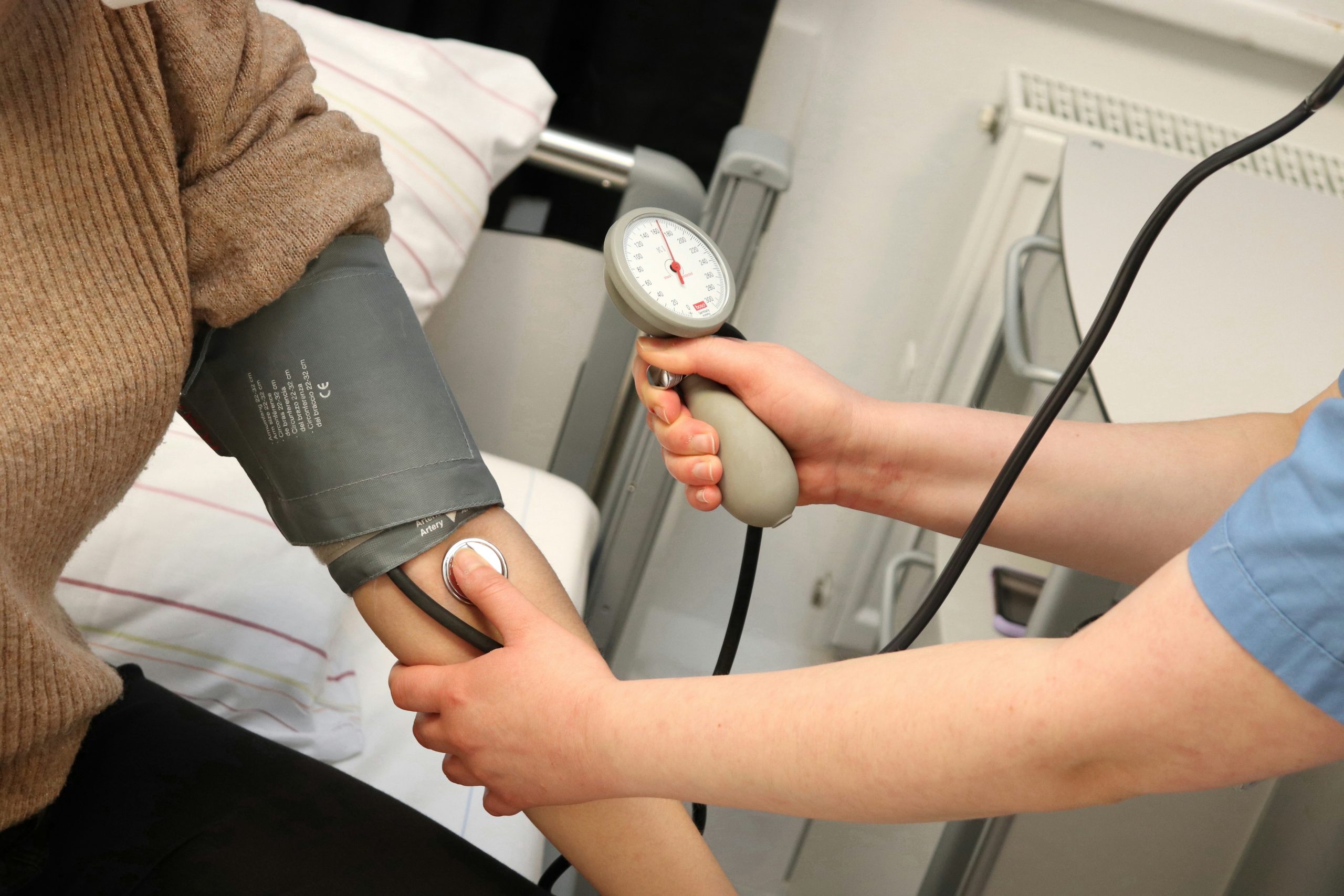
The metric: number and percentage of participants with at least one out-of-range finding, and of those, how many were previously unaware.
This is the most defensible benefit of a screening program, because it is directly measured rather than inferred, and the data exists within days of the event.
The national picture tells you roughly what to expect. The CDC reports that 48.1 percent of US adults have high blood pressure, about 119.9 million people, with only 22.5 percent of them controlling it, and that 115.2 million adults have prediabetes, more than 2 in 5, with 8 in 10 unaware. On lipids, about 86 million adults aged 20 or older have total cholesterol above 200 mg/dL.
Apply those proportions to your own headcount and the scale becomes concrete. In a 400-person workforce you are not looking for a handful of cases. You are looking at a substantial group, most of whom feel completely fine, because these conditions are symptomless in their early stages. Our explainer on what a biometric screening is covers what the panel captures.
What it proves: that undetected risk existed and has now been identified. What it does not prove: that anything improved as a result. That is the next metric.
Benefit 2: Employees Get Into Care Who Otherwise Would Not Have
The metric: referral completion rate, the share of flagged participants who attend a follow-up appointment.
This is the metric that separates a screening event from a health program, and it is the one most vendors do not track. Ask about it during procurement, a point covered in our guide on how to choose a corporate wellness vendor.
Tracking it requires care, because you cannot handle individual health information as the employer. In practice the provider tracks it and reports the rate in aggregate. If your provider cannot report it at all, that tells you something about how they define the end of their job.
What it proves: that the program changed behaviour, not just that it collected data. What it does not prove: a clinical outcome. Attending an appointment is not the same as a condition being controlled.
Benefit 3: Participation Reaches People a Clinic-Based Benefit Never Would
The metric: participation rate as a share of total headcount, segmented by shift and by site.
Insist on total headcount as the denominator rather than opt-ins, because the two produce very different numbers and the distinction is often blurred.
Segmenting by shift is where this gets genuinely useful. If first shift participation is 70 percent and third shift is 15 percent, you have not run a workforce program, you have run a day-shift program. That matters beyond fairness, because rotating and night schedules are associated with elevated cardiovascular and metabolic risk, which we cover in our article on how shift work affects health. The group you missed is the group carrying the most risk.
For context on how common these programs are, KFF's 2025 Employer Health Benefits Survey found that among firms offering health benefits, 43 percent of larger firms with 200 or more workers provide biometric screening and 83 percent offer a health and wellness promotion program of some kind.
What it proves: reach, and whether access barriers are real in your organization. What it does not prove: anything about health outcomes on its own.
Benefit 4: You Get a Baseline That Makes Next Year Legible
The metric: year-over-year movement in the aggregate distribution of results.
A single year of screening data is a photograph. Two years is the beginning of a trend, and a trend is what lets you say something defensible about direction.
This only works if you set it up deliberately. The panel has to stay consistent, the segmentation has to stay consistent, and the report has to be structured so the second year sits directly beside the first. Changing providers or panel composition between years costs you the comparison, which is a hidden switching cost worth weighing.
Our guide on how to start a corporate wellness program treats baselining as step two for exactly this reason.
What it proves: direction of travel across the population you screened. What it does not prove: causation, since the people who participate in year two are not necessarily the same people who participated in year one.
Benefit 5: Absence Patterns Become Interpretable
The metric: your own absence rate, read alongside the aggregate screening findings.
The Bureau of Labor Statistics reports that in 2025, the total absence rate for full-time wage and salary workers was 3.2 percent, of which 2.2 percent was illness, injury, or medical problems. The BLS notes these annual estimates are 11-month averages excluding October, because data were not collected during the federal government shutdown.
That national figure gives you a yardstick for your own rate. What screening adds is a plausible explanation for part of it, which is a different and more useful thing than a bare number. We work through the connection in our article on how employee absenteeism connects to preventable health risks.
What it proves: context. What it does not prove: that your program reduced absence. Absence rates move with seasonality, staffing, policy, and the general infectious disease environment, and attributing a change to a wellness program requires more care than most reporting applies.
Benefit 6: The Program Signals Something About the Organization
The metric: an employee survey item specifically about the screening, not about wellbeing generally.
This is the softest benefit on the list and it is included because it is real, not because it is rigorous. Bringing a clinic on site during paid hours communicates something that a poster campaign does not.
If you are going to claim it, measure it properly. A single targeted question asked after the event produces something usable. Pointing at a general engagement score and attributing a movement to the wellness program does not, because too many other things moved at the same time.
Our article on safety culture examples that improve employee health makes the related point that leaders visibly doing the thing matters more than leaders endorsing it.
What Screening Cannot Prove
Being straight about this is what makes the rest of the list credible.
It does not prevent disease. Screening detects, and detecting earlier generally improves options. It does not stop a condition developing, and any provider claiming otherwise is overselling.
It does not establish a return on investment in year one. The savings ratios that circulate in this category, of the "several dollars saved for every dollar spent" variety, are contested in the literature and depend heavily on study design and on who funded them. Quoting one to a CFO invites a search that will not help you. The stronger position is to report what you actually measured.
It does not prove causation on claims. Claims costs move with plan design, medical inflation, workforce age, and a handful of high-cost cases that have nothing to do with your program. A claims trend is worth watching over several years and is not evidence in a single one.
It does not reach people who do not participate. Obvious, and routinely forgotten when results get presented as though they describe the whole workforce.
A Framework for Structuring the Program
If you want an external structure to organize measurement against, the CDC publishes the Workplace Health Model, which runs in four steps: assessment, planning and management, implementation, and evaluation. The CDC also publishes the Worksite Health ScoreCard, a 154-question assessment across five strategy areas, which is a practical way to establish where you are starting from.
Worth knowing alongside it: the NIOSH Hierarchy of Controls Applied to Total Worker Health ranks eliminate, substitute, redesign, educate, and encourage from most to least effective. Education and encouragement sit at the bottom, which is where a great many wellness programs spend most of their budget.
How NDS Wellness Reports on Program Results
NDS Wellness delivers physician-led on-site biometric screening from a mobile wellness clinic, scheduled across first, second, and third shift so participation is not decided by which crew somebody is on.
Employers receive aggregate, de-identified reporting structured so the second year can be compared directly against the first. Employees have results explained in person by a physician rather than mailed as a printout, and findings that warrant follow-up are referred rather than noted, which is what makes referral completion measurable at all. Individual results stay confidential between the employee and the clinician, consistent with the voluntariness requirements at 29 CFR 1630.14(d)(2).
The wider program is on our corporate wellness page, and our manufacturing case study shows how it has run elsewhere.