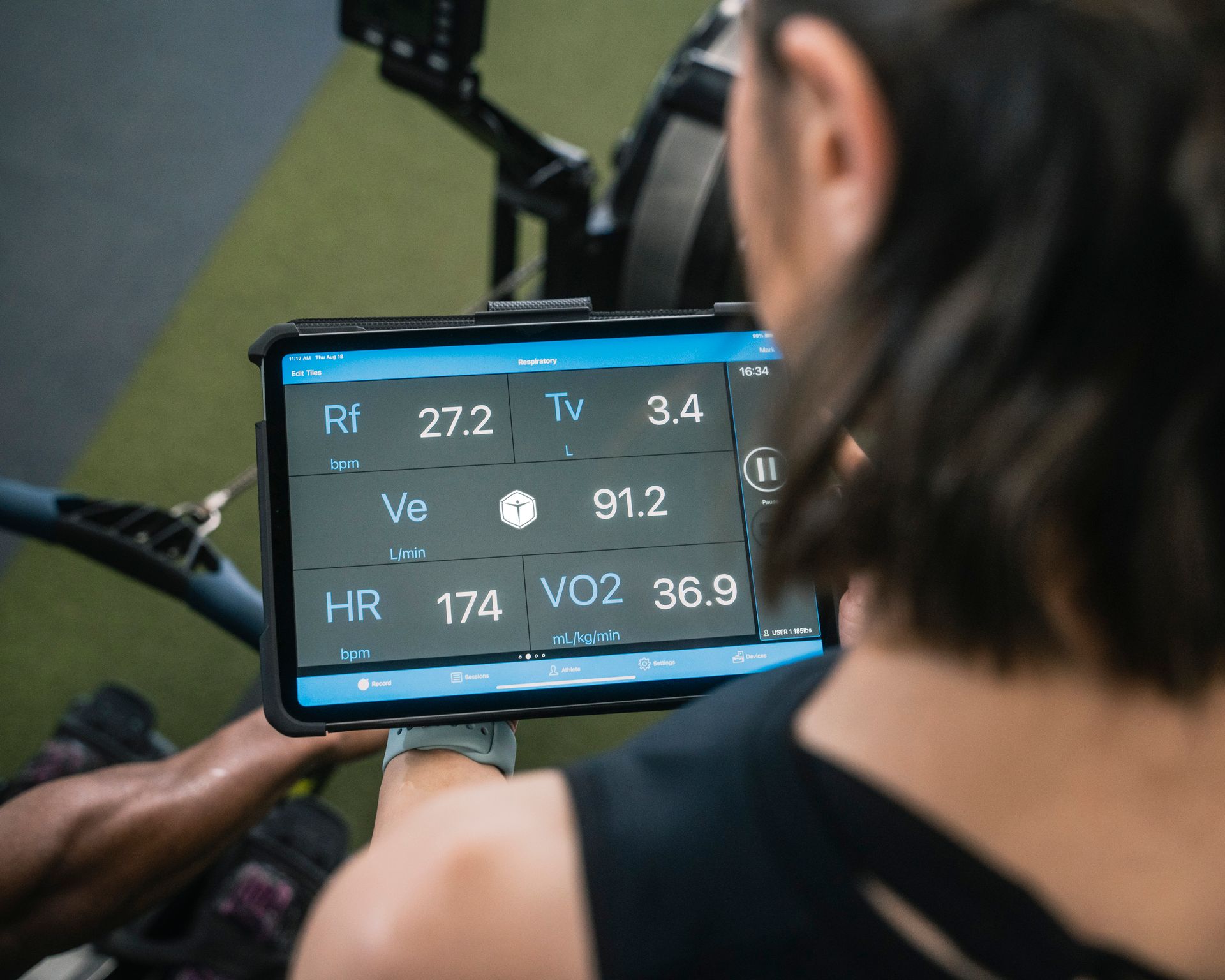
VO2 max is one of the most useful numbers in medicine that most people have never had measured. It captures how well the heart, lungs, and muscles work together at maximum effort, and decades of research have tied it more closely to long-term survival than blood pressure or cholesterol. For police officers, whose worst cardiac moments arrive during sudden all-out exertion, it measures exactly the capacity the job demands when everything is on the line. Here is what the number is, what it reveals about an officer's heart, and why it belongs in a screening program rather than only in an athlete's training log.
Key Insights
- VO2 max is your body's maximum oxygen uptake: It measures how much oxygen the heart, lungs, blood, and muscles can use at peak effort, expressed in milliliters of oxygen per kilogram of body weight per minute.
- It predicts survival better than traditional risk factors: Researchers behind the FRIEND registry note that cardiorespiratory fitness has proven a more powerful predictor of adverse outcomes than hypertension, smoking, obesity, or diabetes.
- Low fitness carries a two to five-fold mortality risk: Research cited by those authors links low cardiorespiratory fitness to a two to five-fold increase in cardiovascular and all-cause mortality, independent of other risk factors.
- For officers, the number has operational meaning: Sudden cardiac death risk rises 34 to 69 times during restraints and altercations, so capacity for sudden exertion is a genuine safety issue, not a fitness vanity metric.
- The number responds to training: Improvements as small as one MET, roughly 3.5 points of VO2 max, have been associated with meaningful reductions in mortality, which makes it a rare risk marker an officer can actively move.
What VO2 Max Actually Measures
VO2 max, or maximal oxygen uptake, is the highest rate at which the body can take in and use oxygen during intense exercise. It is written in milliliters of oxygen per kilogram of body weight per minute, or mL/kg/min.
The Full Chain of Oxygen Delivery
The number is powerful because so much has to go right to produce it. Your lungs have to move oxygen into the blood, your heart has to pump that blood in volume, the blood has to carry the oxygen efficiently, and your muscles have to pull it out and use it. VO2 max measures the weakest link in that chain, which is why a single figure says so much about overall cardiovascular health.
Why It Is Called the Gold Standard of Fitness
Cardiorespiratory fitness reflects the integrated function of the entire cardiovascular system rather than one isolated marker. That is why the researchers behind the FRIEND registry have described it as a more powerful predictor of adverse outcomes than the traditional risk factors clinicians usually track, including high blood pressure, abnormal cholesterol, smoking, physical inactivity, obesity, and diabetes.
What the Number Reveals About Heart Health
VO2 max is not only a measure of how fit someone is today. It is one of the strongest available signals of future cardiovascular risk.
A Window Into Cardiovascular Disease Risk
Because the heart is central to oxygen delivery, a low VO2 max can be an early sign that the cardiovascular system is not performing as it should. Research cited by the FRIEND authors links low cardiorespiratory fitness, typically the lowest quartile or quintile on an exercise test, to a two to five-fold increase in cardiovascular and all-cause mortality, independent of other risk factors.
The Number You Can Actually Change
Unlike age or family history, VO2 max responds to training. Gains of even one MET, roughly 3.5 mL/kg/min, have been associated with mortality reductions in the range of 10 to 25 percent in the research the FRIEND team cites. That makes it one of the few cardiac risk markers a person can meaningfully improve, which is exactly why measuring it gives an officer somewhere to go.
Why This Number Matters More for Officers
For the general population, VO2 max is a strong general health indicator. In police work, it maps directly onto the moment the job turns dangerous.
The Sudden Exertion Problem
Police work is long stretches of low activity broken by seconds of maximum effort with no warm-up. An officer can go from sitting in a vehicle to sprinting or fighting within seconds, under acute stress with adrenaline already surging. VO2 max measures the reserve available for exactly that transition.
What the Cardiac Research Shows
A study led by Harvard School of Public Health researchers, published in the BMJ, examined 441 sudden cardiac deaths among US law enforcement officers. Compared with routine duty, the risk of sudden cardiac death was 34 to 69 times higher during restraints and altercations, and 32 to 51 times higher during pursuits. Those events do not create heart disease. They expose disease that was already there.
Capacity as a Safety Margin
Higher cardiorespiratory fitness means more reserve when that surge arrives, and a heart under less relative strain during the effort. Measuring VO2 max tells an officer and a department how much margin actually exists before the job pushes the cardiovascular system to its limit.
How VO2 Max Is Measured
Not every number labeled VO2 max is produced the same way, and the difference matters when a department is making decisions from it.
Measured Versus Estimated
The gold standard is a cardiopulmonary exercise test, where a person exercises to maximum effort while a machine analyzes the oxygen and carbon dioxide in their breath. Estimates from a treadmill time, a submaximal step test, or a wrist wearable are useful for tracking your own trend, but they carry meaningful error and are not equivalent to a measured result. For the reference numbers by age and sex, see our VO2 max chart by age.
What a Supervised Stress Test Adds
Measuring VO2 max during a supervised stress test does something a wearable never can. While capturing capacity, it also monitors the heart's electrical activity and how it responds under load, which can reveal ischemia or rhythm problems that stay hidden at rest. For an officer, that combination of capacity and what the heart does under stress is the entire point.
How NDS Wellness Measures Officer Cardiac Fitness
NDS Wellness built its police health and wellness program around the cardiovascular risks this research identifies. Officers receive a full cardiac assessment that includes a stress test with VO2 max, a 12-lead EKG, and an echocardiogram, alongside comprehensive blood work. It is a measured evaluation performed by a physician, not a fitness estimate from a wrist device, and the results are explained in person.
Because we arrive in a mobile wellness clinic, testing happens at your department across every watch, so no officer gives up a rest day to be evaluated. Results stay confidential between the officer and the clinician, and follow-up care is coordinated when something needs attention. For the wider context on why this matters, see our breakdown of the police officer mortality rate research.
Frequently Asked Questions
What is VO2 max?
VO2 max is the maximum amount of oxygen your body can take in and use during intense exercise, measured in milliliters of oxygen per kilogram of body weight per minute. It reflects the combined capacity of the heart, lungs, blood, and muscles, and is widely considered the best single measure of aerobic fitness.
What does VO2 max reveal about heart health?
Because the heart drives oxygen delivery, VO2 max is a strong indicator of cardiovascular health and future risk. Research cited by the FRIEND registry links low cardiorespiratory fitness to a two to five-fold increase in cardiovascular and all-cause mortality, independent of traditional risk factors like blood pressure and cholesterol.
Why does VO2 max matter for police officers?
Police work demands sudden maximal exertion without warning, and research in the BMJ found sudden cardiac death risk 34 to 69 times higher during restraints and altercations than routine duty. VO2 max measures the cardiovascular reserve available for exactly those moments, making it a genuine safety measure for officers.
What is a good VO2 max?
A good VO2 max depends on age and sex, since the value declines naturally with age and runs higher in men on average. Rather than a single target, it is best read against age and sex reference standards. Our VO2 max chart by age lays out those percentile ranges in detail.
Is VO2 max a better predictor than cholesterol or blood pressure?
Research suggests it is a powerful one. The FRIEND registry authors note that cardiorespiratory fitness has proven a more powerful predictor of adverse outcomes than traditional risk factors including hypertension, cholesterol abnormalities, smoking, obesity, and diabetes. It complements those markers rather than replacing them.
Can you improve your VO2 max?
Yes, which is part of what makes it valuable. VO2 max responds to aerobic training, and research cited by the FRIEND team associates improvements of even one MET, about 3.5 mL/kg/min, with mortality reductions of 10 to 25 percent. It is one of the few cardiac risk markers a person can actively move.
How is VO2 max measured accurately?
The gold standard is a cardiopulmonary exercise test, where you exercise to maximum effort while a machine analyzes your expired gases. Estimates from treadmill time, step tests, or wrist wearables are useful for tracking trends but carry meaningful error and are not equivalent to a directly measured result.
Is a smartwatch VO2 max estimate accurate?
Wearable estimates are useful for following your own trend over time but should not be treated as a clinical measurement. They are calculated from heart rate and pace rather than measured from your breath, so they can differ meaningfully from a true VO2 max obtained through a cardiopulmonary exercise test.
What does a low VO2 max indicate?
A low VO2 max can signal that the cardiovascular system is not performing well and is associated with higher cardiovascular and all-cause mortality risk. It is a reason to look more closely with a physician rather than a diagnosis on its own, since many factors influence the number.
Does NDS Wellness measure VO2 max for officers?
Yes. NDS Wellness includes stress testing with VO2 max as part of its police cardiac assessment, delivered on site in a mobile wellness clinic across every watch. It is performed alongside a 12-lead EKG, an echocardiogram, and comprehensive blood work, with results explained by a physician.
Measure the Capacity the Job Demands
VO2 max reveals what an officer's heart can handle and what may be developing quietly beneath the surface. A measured cardiac assessment turns that from a guess into a number you can act on. Book a Consultation and we will build a cardiac screening program around your department, your watches, and your budget. Call 888-267-4786 to get started.
Sources
-
- Kaminsky LA, Arena R, Myers J. "Reference Standards for Cardiorespiratory Fitness Measured With Cardiopulmonary Exercise Testing: Data From the Fitness Registry and the Importance of Exercise National Database (FRIEND)." Mayo Clinic Proceedings, 2015: mayoclinicproceedings.org
- Varvarigou V, Farioli A, Korre M, Sato S, Dahabreh IJ, Kales SN. "Law enforcement duties and sudden cardiac death among police officers in United States: case distribution study." BMJ, 2014;349:g6534: pubmed.ncbi.nlm.nih.gov/25406189/
- Kaminsky LA, Arena R, Beckie T, et al. "The importance of cardiorespiratory fitness in the United States: the need for a national registry." American Heart Association scientific statement, Circulation, 2013.