Search for health fair ideas and you will mostly find party planning. Smoothie bars, raffle wheels, a chair massage station, a photo booth with props. None of it is bad. All of it is about getting people through the door.
Getting people through the door is a real problem worth solving. But it is the first problem, not the only one, and most health fairs stop there. Two hundred employees attend, everybody has a nice time, and nothing measurable about anyone's health is different the following week.
This article sorts health fair ideas into two groups: the ones that produce a measurable health result, and the ones that produce attendance. You need both. The mistake is running only the second group and calling the day a health fair.
Key Insights
- Attendance is a means, not the outcome: a well-attended fair where nothing was measured produces goodwill and no health data.
- Screening is the only element that generates a finding: everything else informs, encourages, or entertains, which the NIOSH Total Worker Health hierarchy ranks as the least effective layers.
- A number without an explanation changes nothing: pair every measurement station with someone qualified to say what the result means.
- Run it across shifts or accept who you will miss: a single daytime event systematically excludes the same second and third shift crews every year.
- Decide what you will measure before the day: headcount is easy and nearly meaningless on its own.
The Problem With Most Health Fair Ideas
A health fair is a day of attention. Attention is scarce and expensive, and most organizations get one of these a year. The question worth asking is what you want to be different afterwards.
If the answer is that employees should feel the organization cares, a well-run social event achieves that. If the answer is that people carrying undetected health risk should find out, almost nothing on a conventional health fair agenda will do it.
The conditions a workplace most needs to catch are silent. The CDC states that high blood pressure usually has no warning signs or symptoms, and reports that 115.2 million US adults have prediabetes with 8 in 10 unaware. Nobody walks up to an information table because they feel unwell. They feel fine. That is the entire problem.
Ideas That Produce a Measurable Health Result
These are the elements that generate data, a finding, or an action. If your fair has none of them, it is a wellness event rather than a health fair.
1. An On-Site Biometric Screening Station
The anchor. Blood pressure, a lipid panel, glucose or A1C, and body measurements, taken by clinical staff in a private space. This is the only element on the agenda capable of telling an employee something they did not already know about their own health. Our explainer on what a biometric screening is covers what the panel includes.
2. A Blood Pressure Station With Someone Who Explains the Reading
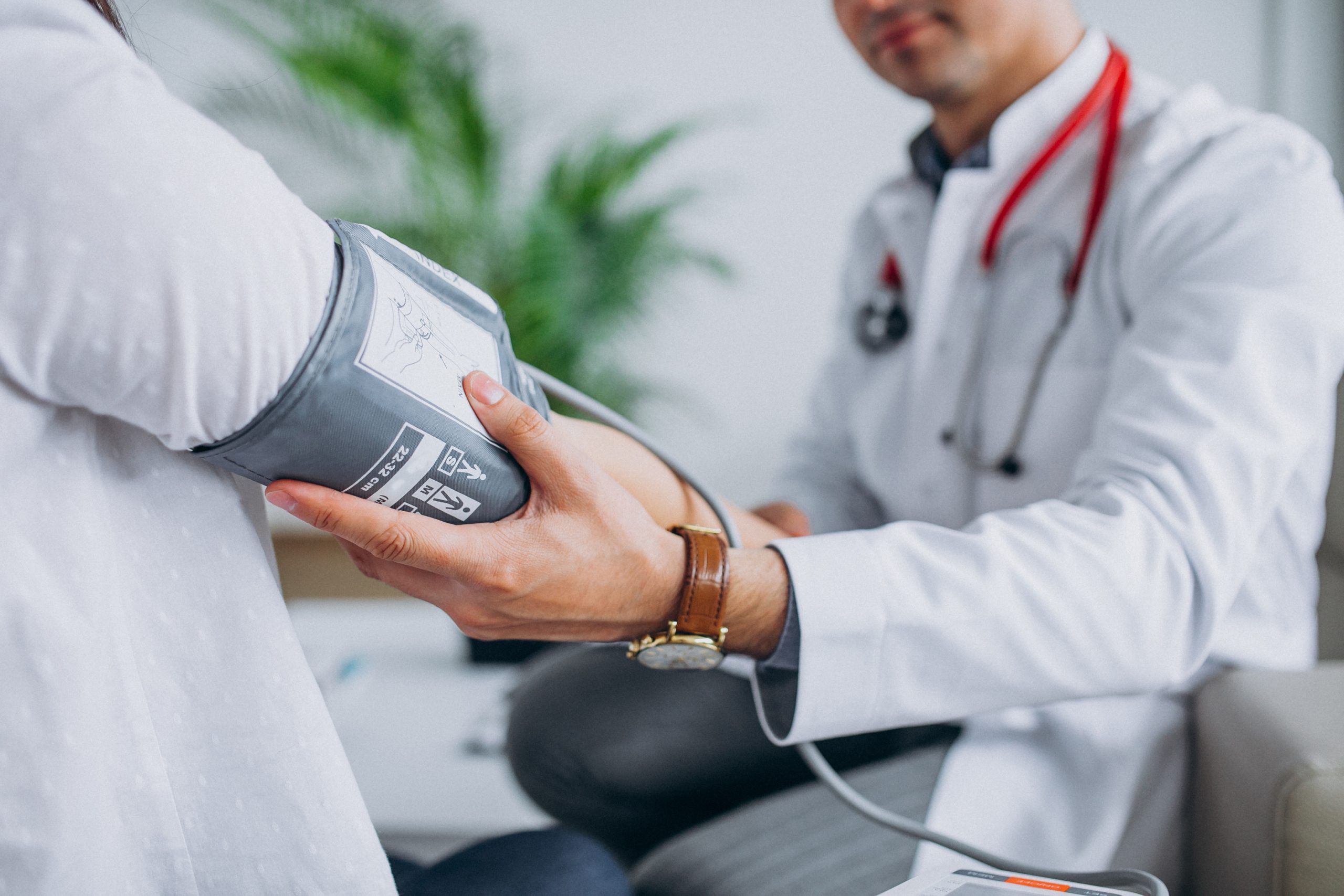
A cuff on a table is not enough. The value sits in the sentence that follows the number, which is why the station needs a clinician rather than a volunteer. Two minutes, no fasting, no needle, and it finds the most common screenable condition in any workforce. We cover the detail in what blood pressure screening catches at work.
3. Private Clinician Consultation Slots
Bookable fifteen-minute slots where an employee can go through their results with a clinician. This converts a measurement into a conversation, and conversations are what produce follow-up. It also gives people somewhere to ask the question they would not raise at a table in front of colleagues.
4. A Referral Desk
Staffed by someone who can connect an employee with an out-of-range finding to actual care, including employees who do not currently have a primary care physician. The difference between "you should see a doctor" and a booked next step is the difference between a statistic and an outcome.
5. A Know Your Numbers Card
A physical card each participant leaves with, carrying their own readings and the reference ranges beside them. It gives people something to bring to their next appointment and something to compare against next year. Pair it with our guide on how to read your biometric screening results.
6. A Shift-Covering Schedule
Not a booth, a design decision, and the one with the largest effect on who is actually reached. Running the fair across first, second, and third shift, or repeating it, determines whether your night crews are included. Shift workers also carry elevated cardiovascular and metabolic risk, as covered in our article on how shift work affects health.
7. A Results Follow-Up Window
A scheduled point, two or three weeks later, when employees can ask questions about results or get help acting on them. Most programs end when the tables fold. The follow-up window costs very little and is where a surprising amount of the actual behaviour change happens.
8. A Benefits Navigation Table
Someone who can tell an employee what their existing plan already covers. A large share of people do not know what preventative care they are entitled to, and this table routinely turns up coverage nobody was using.
Ideas That Produce Attendance
These do not generate health findings, and that is fine. Their job is to get people in the room so the first list can do its work. Judge them on footfall, not outcomes.
Food. The single most reliable driver of attendance at any workplace event. Catered lunch, a coffee cart, a smoothie station.
A prize draw tied to station completion. Entry earned by visiting a set number of stations, which routes people past the screening table rather than straight to the food.
Chair massage or stretch demonstrations. Popular, pleasant, and genuinely welcome in physically demanding workplaces.
A team challenge launch. A step or activity challenge kicked off at the fair, which extends the day into something with a tail.
Local vendor tables. Gyms, pharmacies, physiotherapists. Vet them, and make sure a sales table never sits between an employee and the screening station.
Leadership presence. Not a station, but the most under-used lever available. A plant manager visibly going through the screening line signals more than any poster. It is the same principle as the first item in our piece on safety culture examples: leaders doing the thing matters more than leaders endorsing it.
Health Fair Booth Ideas That Actually Work
If you are designing individual booths, three rules separate the ones that earn their floor space.
Each booth should produce something the employee takes away. A number, a card, a booked appointment, a specific next step. A booth that produces only a pamphlet is a pamphlet with a table.
Staff every measurement booth with someone who can interpret. If the person at the table can take a reading but cannot explain it, you have built a vending machine for numbers.
Put privacy where it is needed. Blood pressure and blood draws need a screened area. People will skip a station rather than have a reading taken in front of a queue of colleagues, and the people most likely to skip are those who suspect the number will be bad.
Planning the Day
A few practical decisions shape everything else.
Timing. Position the fair across shift change where possible, so outgoing and incoming crews both have access without anyone leaving their post.
Space. Screening needs a private area with a door, not a corner of the cafeteria. If no suitable room exists, a mobile clinic in the car park solves it.
Communication. Tell people in advance what is being measured, whether fasting is required, and crucially who sees the results. Ambiguity on that last point is the most common reason people opt out.
Consent. Participation must be voluntary. Under 29 CFR 1630.14(d)(2), an employer cannot require participation in a program involving medical examinations, deny or limit coverage for declining, retaliate, or coerce, and must provide a notice describing what is collected and how it is used.
Paid time. If attending costs an employee their break or their own time, participation drops and drops unevenly. Running the fair on paid time is the clearest signal that the organization means it.
How to Measure Whether It Worked
Pick the measures before the day, because afterwards everyone defaults to headcount.
Participation as a share of total headcount, not of people who pre-registered. Screening completion as a share of attendance, which tells you whether people came for the food and left. The proportion of participants with at least one out-of-range finding, which is the number that justifies the program. Referral completion where you can track it without handling individual health information. And the year-over-year comparison, which needs this year's data structured so next year's can sit beside it.
Resist promising a return-on-investment figure. The multiples circulating in this category are contested, and a claim your finance team can puncture does more damage than making no claim. "We screened 240 people and 58 had a finding they did not know about" is a stronger sentence than any ratio.
How NDS Wellness Runs On-Site Health Screening Events
NDS Wellness brings a mobile wellness clinic to your site, which solves the privacy and space problem without you finding a room. We run physician-led on-site biometric screening across first, second, and third shift, so the crews a single daytime event would miss are included.
Because a physician is present, employees have results explained in person rather than handed a printout, and findings that warrant follow-up are referred rather than noted. Employers receive aggregate reporting on workforce health, structured for year-over-year comparison. Individual results stay confidential between the employee and the clinician.
See the full program on our corporate wellness page, or how a program has run elsewhere in our manufacturing case study.