A resting heart can hide a serious problem. An artery can be significantly narrowed and still cause no symptoms while a person sits quietly, which is exactly why a resting exam can come back clean and miss real disease. A stress echo test is designed to solve that. It images the heart under the load of exertion, when a struggling blood supply finally shows itself. For police officers, whose most dangerous cardiac moments arrive during sudden maximal effort, that is precisely the information that matters. Here is what a stress echo actually is, how it works, and why it belongs at the center of cardiac screening built for law enforcement.
Key Insights
- A stress echo images the heart before and after exertion: It combines an ultrasound of the heart with the stress of exercise or medication, comparing how the heart muscle moves at rest and at peak effort.
- It reveals disease a resting test cannot: A narrowed artery can look normal at rest and only reveal itself when the heart is pushed, which is the entire reason the test exists.
- It uses sound waves, not radiation: Because it relies on ultrasound rather than a radioactive tracer or X-ray, a stress echo involves no ionizing radiation exposure.
- It is accurate and specific: Research puts the sensitivity of exercise stress echo for coronary artery disease around 85 percent, with high specificity, and it is generally considered more specific than nuclear imaging.
- It maps directly onto police cardiac risk: With sudden cardiac death risk far higher during exertion, a test that measures the heart under load is uniquely suited to law enforcement screening.
What a Stress Echo Test Actually Is
A stress echocardiogram, usually shortened to stress echo, is a cardiac test that combines two things: an echocardiogram, which is an ultrasound image of the heart, and a controlled cardiac stress, usually exercise. The combination is what gives it diagnostic power.
The Two Halves of the Test
First, a technician captures ultrasound images of the heart at rest, showing the chambers, valves, and how the heart muscle contracts. Then the heart is stressed, most often by walking on a treadmill until it reaches a target effort level. Immediately after peak exertion, the imaging is repeated. The heart is working its hardest, and any area not getting enough blood reveals itself in how it moves.
What the Comparison Shows
A healthy heart contracts more forcefully under stress. A section supplied by a narrowed artery cannot keep up, so it moves abnormally when pushed. Comparing the resting and post-stress images lets a cardiologist see a wall motion abnormality, a region of heart muscle that falters under load, which is the signature of a blood supply that cannot meet demand.
How a Stress Echo Detects Hidden Heart Disease
The genius of the test is in its timing. It catches the heart in the one state where a hidden problem cannot stay hidden.
Why a Blocked Artery Hides at Rest
At rest, the heart's demand for blood is low, and even a significantly narrowed artery can supply enough to keep the muscle working normally. Nothing looks wrong because, at that moment, nothing is failing. This is why a person can have meaningful coronary artery disease and a completely normal resting EKG and echocardiogram.
What Changes Under Exertion
Exercise raises the heart's demand for oxygen sharply. A healthy artery widens to deliver more blood, but a narrowed one cannot, so the muscle it feeds becomes starved and starts to contract poorly. That is the moment a stress echo captures. The wall motion abnormality that appears only under stress is direct evidence of a coronary artery that cannot meet demand.
How It Compares to Other Cardiac Tests
A stress echo is one of several cardiac tests, and understanding the differences clarifies why it is often the right choice for screening active people.
Stress Echo Versus a Standard Stress Test
A standard exercise stress test tracks only the heart's electrical activity through an EKG during exercise. A stress echo adds ultrasound imaging before and after, so a clinician can see how the heart muscle physically moves, not just its electrical signals. That added imaging catches problems an EKG-only test can miss.
Stress Echo Versus Nuclear Imaging
Nuclear stress testing uses an injected radioactive tracer to map blood flow. It is slightly more sensitive for some disease, but a stress echo is generally more specific, meaning fewer false alarms, and it involves no radiation. For that reason a stress echo is often preferred for people at lower to intermediate cardiovascular risk, which describes much of a working police force.
When Medication Replaces Exercise
Some people cannot exercise hard enough for a valid test. In those cases a medication such as dobutamine is used to make the heart work harder in a controlled way, producing the same stress the treadmill would. For most working officers, though, the exercise version is both appropriate and informative.
Why This Test Fits Police Screening
A stress echo is useful for many people, but for law enforcement the fit is unusually precise. The test measures exactly the capacity the job puts at risk.
The Exertion Problem in Policing
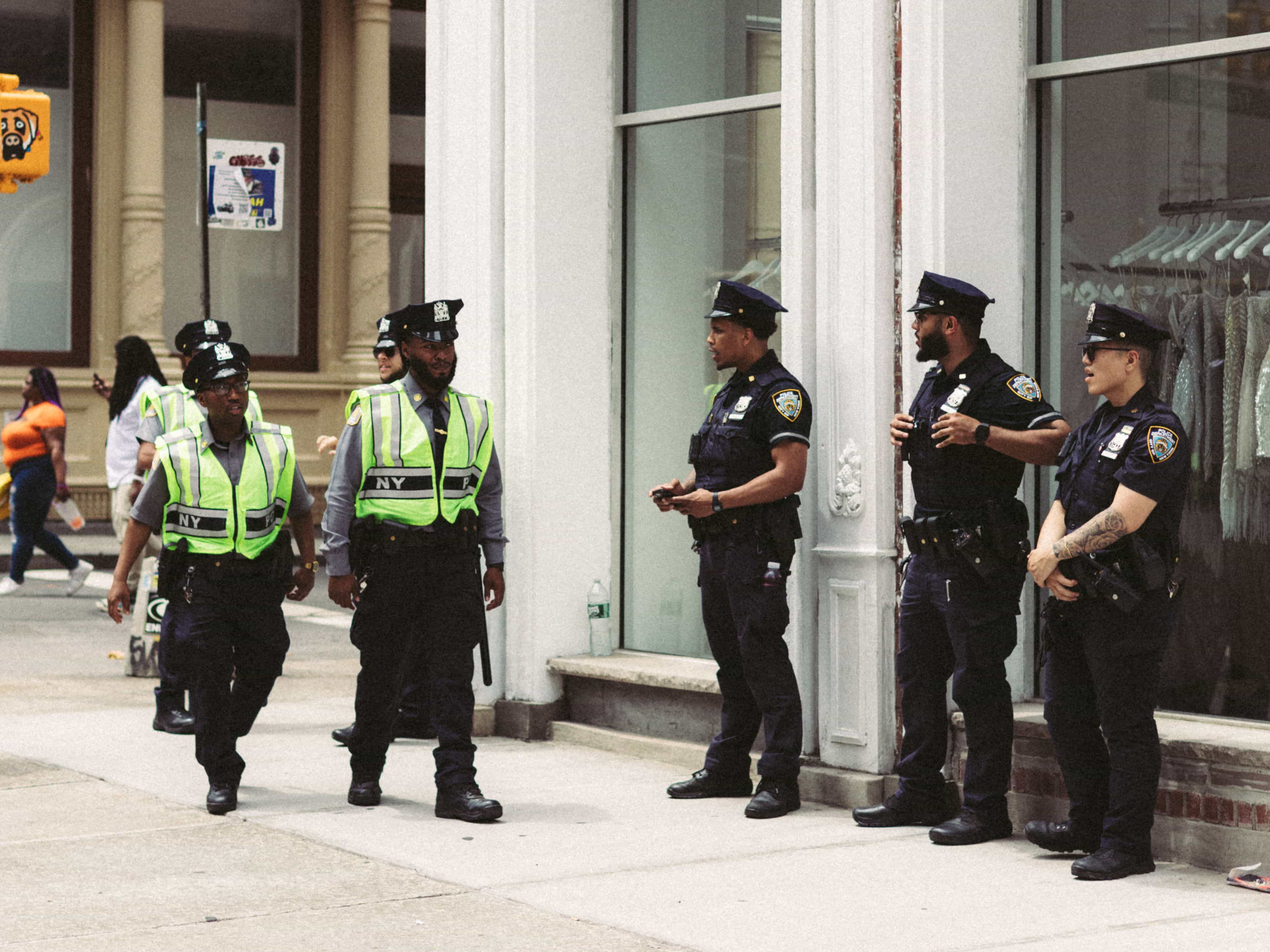
Police work is long stretches of low activity broken by seconds of maximum effort with no warning. A study led by Harvard School of Public Health researchers, published in the BMJ, found sudden cardiac death risk was 34 to 69 times higher during restraints and altercations than during routine duty. Those events do not create heart disease. They expose disease that was already present and silent.
A Test That Matches the Risk
A resting exam checks the heart in the state officers are almost never in when the danger strikes. A stress echo checks it in the state that mirrors the job's worst moment, under maximal load. That alignment between what the test measures and what the job demands is why it belongs at the center of a police cardiac program. Our overview of police cardiac and stroke screening shows how it fits into a full assessment, and our look at the research behind police cardiovascular risk explains why the stakes are so high.
How NDS Wellness Delivers Cardiac Screening to Departments
NDS Wellness built its police health and wellness program around the cardiovascular risks the research identifies. A full assessment includes stress testing, a 12-lead EKG, and an echocardiogram, alongside comprehensive blood work, delivered by a physician who reviews the findings with each officer directly rather than mailing a report.
Because we arrive in a mobile wellness clinic, testing happens at your department across every watch, so no officer gives up a rest day to be evaluated. Results stay confidential between the officer and the clinician, and when a finding needs attention, we coordinate the follow-up. It pairs naturally with cardiac fitness measures like VO2 max, which gauges the capacity a stress echo tests under load.
Frequently Asked Questions
What is a stress echo test?
A stress echo, or stress echocardiogram, is a cardiac test that combines an ultrasound of the heart with the stress of exercise or medication. It images the heart at rest and again at peak effort, letting a cardiologist see areas that do not get enough blood when the heart is pushed to work harder.
What does a stress echocardiogram show?
It shows how the heart muscle moves under stress compared with rest. A region supplied by a narrowed artery contracts poorly when the heart is pushed, producing a wall motion abnormality. That pattern is direct evidence of coronary artery disease that may be invisible on a resting test.
How is a stress echo different from a regular stress test?
A standard stress test records only the heart's electrical activity on an EKG during exercise. A stress echo adds ultrasound imaging before and after exertion, so a clinician can see how the heart muscle actually moves under load, not just its electrical signals. The imaging catches problems an EKG alone can miss.
Is a stress echo test safe?
Stress echocardiography is considered safe and is widely used. It involves no ionizing radiation because it relies on ultrasound rather than a radioactive tracer or X-ray. As with any exercise test, it is supervised by trained staff who monitor the heart throughout, and it is stopped if any concerning sign appears.
Does a stress echo involve radiation?
No. A stress echo uses ultrasound, which is sound waves, so there is no ionizing radiation exposure. This is one advantage it has over nuclear stress imaging, which uses an injected radioactive tracer. The lack of radiation makes it well suited to routine cardiac screening.
How accurate is a stress echo?
Research puts the sensitivity of exercise stress echocardiography for coronary artery disease at roughly 85 percent, with high specificity. It is generally considered more specific than nuclear perfusion imaging, meaning it produces fewer false positives, though accuracy depends on image quality and the experience of the interpreting cardiologist.
How long does a stress echo take?
A stress echo typically takes about 45 minutes to an hour, including resting images, the exercise or medication phase, and the post-stress images. The active exertion portion is usually only a few minutes, with the rest of the time spent on preparation, imaging, and monitoring during recovery.
Why would a police officer need a stress echo?
Police work demands sudden maximal exertion, and research found sudden cardiac death risk 34 to 69 times higher during restraints and altercations than routine duty. A stress echo evaluates the heart under exactly that kind of load, making it well matched to the cardiovascular risks officers actually face on the job.
Can a stress echo detect blockages a resting test misses?
Yes, that is its central purpose. A narrowed artery can supply enough blood at rest to appear normal, then fall short when exertion raises demand. By imaging the heart at peak effort, a stress echo reveals the wall motion abnormalities that signal a blockage a resting EKG or echocardiogram would not catch.
Does NDS Wellness offer stress testing for officers?
Yes. NDS Wellness includes stress testing as part of its police cardiac assessment, delivered on site in a mobile wellness clinic across every watch. It is performed alongside a 12-lead EKG, an echocardiogram, and comprehensive blood work, with results explained by a physician and follow-up coordinated.
Bring Cardiac Screening to Your Department
A resting exam checks an officer's heart in the state it is rarely in when danger strikes. A stress-based assessment checks it under the load the job actually demands. Book a Consultation and we will build a cardiac screening program around your department, your watches, and your budget. Call 888-267-4786 to get started.
Sources
-
- Cleveland Clinic Journal of Medicine, Stress testing and noninvasive coronary imaging (stress echo sensitivity and specificity, comparison with nuclear imaging, and absence of radiation).
- American Heart Association, Circulation, Stress echocardiography in the detection of myocardial ischemia (exercise, dobutamine, and dipyridamole sensitivity and specificity).
- Varvarigou V, Farioli A, Korre M, Sato S, Dahabreh IJ, Kales SN. "Law enforcement duties and sudden cardiac death among police officers in United States." BMJ, 2014: pubmed.ncbi.nlm.nih.gov/25406189/