If your employer has scheduled a biometric screening, you have probably been handed a date, a location, and very little else. Maybe a note about fasting. The word itself does not help: biometric sounds like a fingerprint scanner, which is a reasonable guess and completely wrong.
A biometric screening is a short set of health measurements taken at a single appointment. It records a handful of numbers that together describe how your cardiovascular and metabolic systems are doing right now. That is the whole idea. It is not a physical, it is not a diagnosis, and it is emphatically not a drug test.
This article covers what gets measured and why, what the readings indicate, what a screening deliberately leaves out, how a workplace screening actually runs, and the question most employees care about most: who gets to see the results.
Key Insights
- A biometric screening measures four core areas: blood pressure, blood lipids, blood glucose, and body measurements. Everything else is an addition to that base.
- It is a snapshot, not a diagnosis: an out-of-range number is a reason to see a physician, not a conclusion about your health.
- The conditions it looks for are usually silent: the CDC notes that high blood pressure usually has no warning signs or symptoms, which is exactly why measurement is the only way to find it.
- Participation has to be voluntary: under 29 CFR 1630.14(d)(2), an employer cannot require you to take part or penalize you for declining.
- Your employer does not see your individual results: they receive de-identified aggregate data about the group, not a file with your name on it.
What a Biometric Screening Measures
The exact panel varies between providers, but the core is consistent. These are the measurements that carry the most information about cardiovascular and metabolic risk for the least amount of time and discomfort.
Blood Pressure
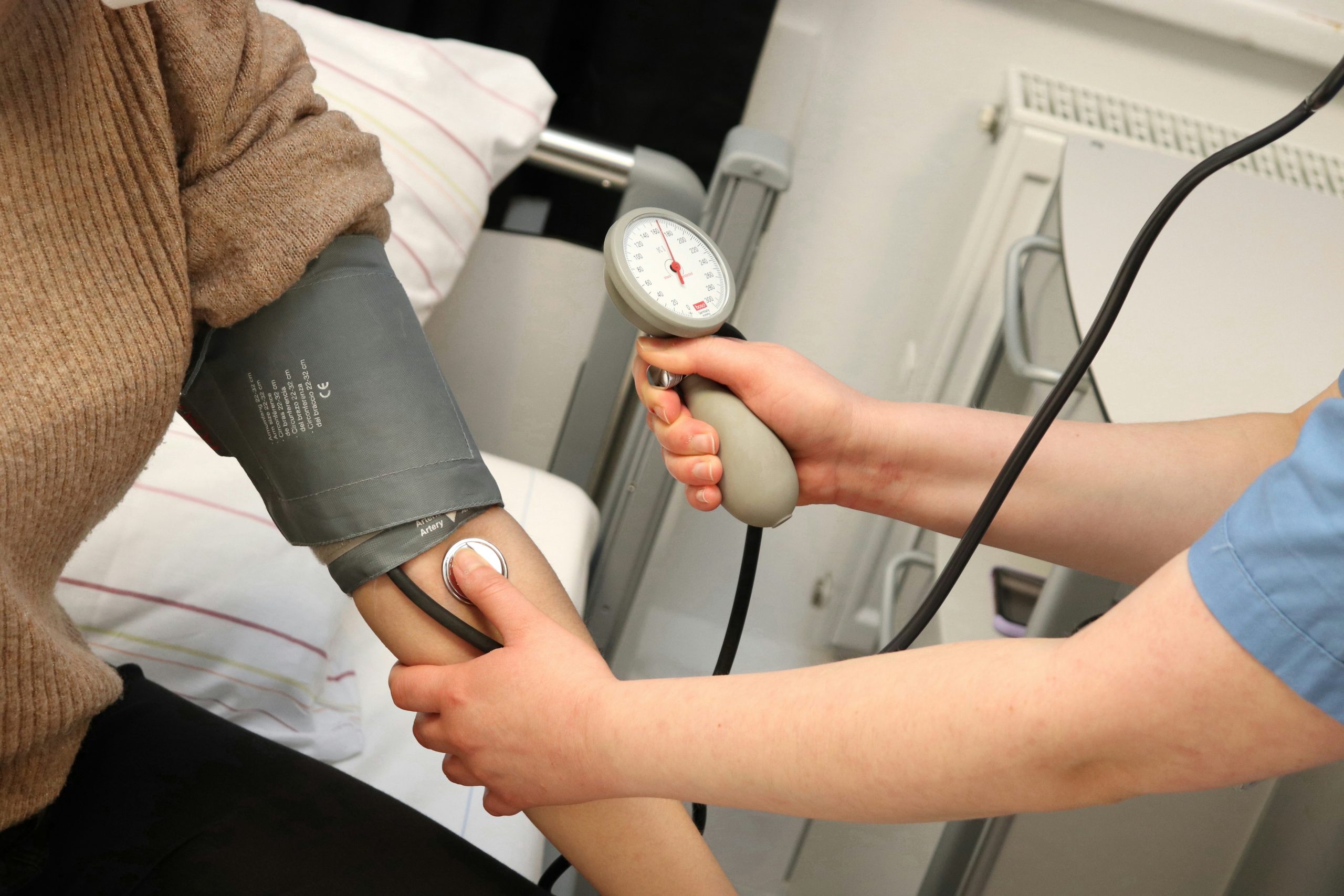
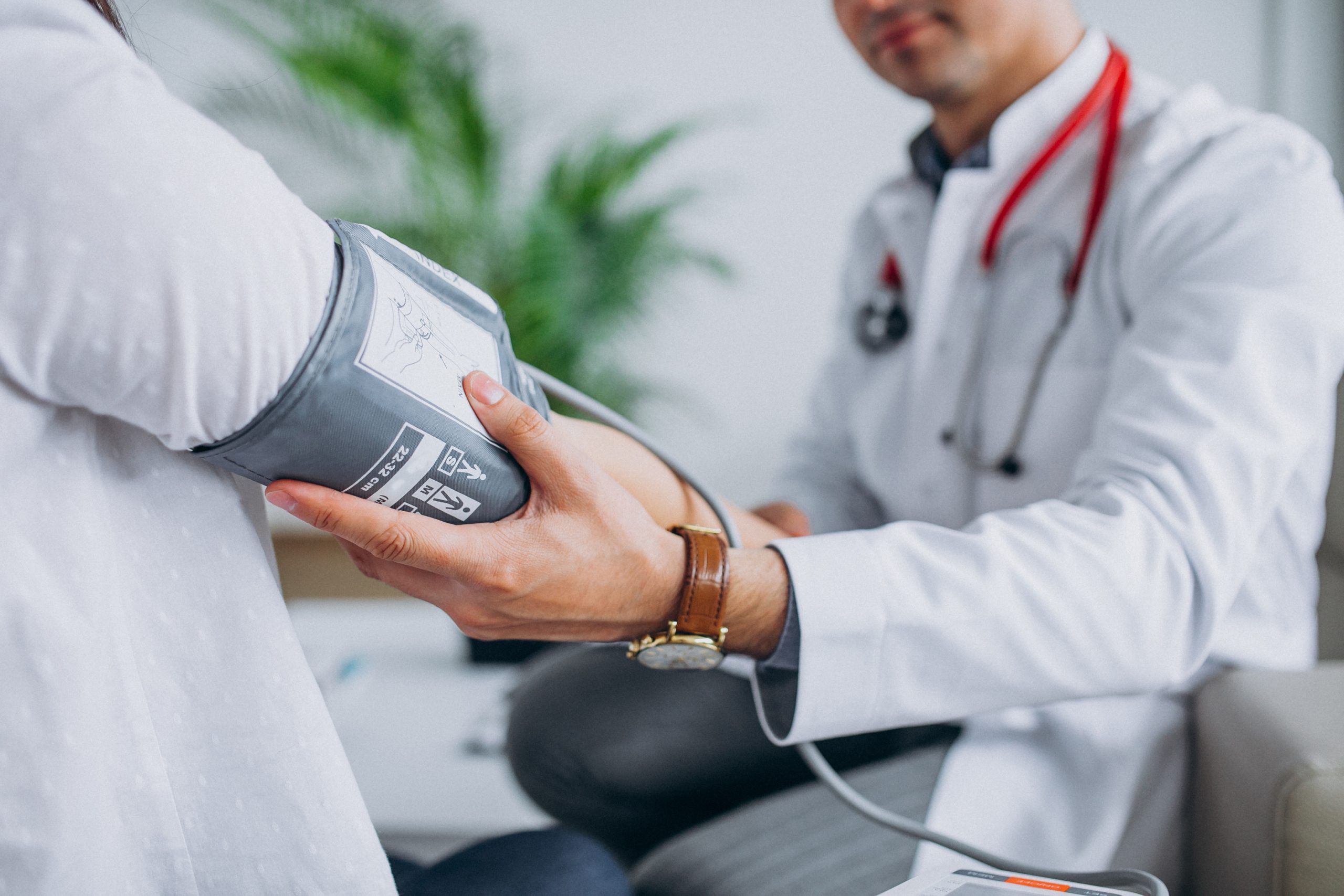
A cuff reading, usually taken after you have been seated for a few minutes. You get two numbers: systolic, the pressure when the heart beats, over diastolic, the pressure between beats.
The American Heart Association sorts readings into categories. Normal is under 120 systolic and under 80 diastolic. Elevated is 120 to 129 systolic with diastolic still under 80. Stage 1 hypertension is 130 to 139 systolic or 80 to 89 diastolic. Stage 2 is 140 or higher, or 90 or higher. Above 180 systolic or 120 diastolic is severe, and if it comes with symptoms it is an emergency.
Blood pressure is the single most valuable measurement in the panel, partly because it is so common. The CDC reports that 48.1 percent of US adults, roughly 119.9 million people, have high blood pressure, and only about 22.5 percent of them have it under control. We go deeper on this in our article on what blood pressure screening catches at work.
Cholesterol and the Lipid Panel
A lipid panel is a blood test. According to MedlinePlus, it measures four things: total cholesterol, LDL cholesterol, HDL cholesterol, and triglycerides. LDL is the one that contributes to arterial plaque. HDL helps carry cholesterol away. Triglycerides are a separate fat in the blood that tracks closely with diet, alcohol intake, and metabolic health.
The sample is usually a finger prick at a workplace screening, or a venous draw if a fuller panel is being run. On fasting, guidance has loosened. MedlinePlus notes you may need to fast for 9 to 12 hours, while the American Heart Association says the test may be fasting or non-fasting depending on your situation. Your screening provider will tell you which applies. If nobody told you, assume you should ask rather than guess.
Context for the numbers: the CDC reports that about 86 million US adults aged 20 or older have total cholesterol above 200 mg/dL, and that between 2017 and 2020, 10 percent of adults had total cholesterol above 240 mg/dL.
Blood Glucose or A1C
Either a glucose reading, which captures your blood sugar at that moment, or an A1C, which reflects average blood sugar over roughly the previous three months. A1C is the more informative of the two because a single glucose reading is heavily influenced by what you ate and when.
The American Diabetes Association sets the thresholds clearly. Below 5.7 percent is normal. From 5.7 to 6.4 percent is prediabetes. At 6.5 percent or above, a diagnosis of diabetes is indicated, though confirmation normally requires a repeat test.
This is the measurement with the largest hidden population behind it. The CDC reports that 115.2 million US adults have prediabetes, more than 2 in 5 adults, and that 8 in 10 of them do not know. A screening will not tell you that you have diabetes. It can tell you that a number is drifting in a direction worth discussing with a physician while there is still plenty of room to act.
Body Measurements
Height, weight, and body mass index, usually with waist circumference. BMI is a rough instrument and it misreads muscular people in particular, which is why waist measurement often sits alongside it. Neither number diagnoses anything on its own. They matter because together with blood pressure, glucose, and lipids they complete a cluster of risk factors clinicians look at as a group rather than individually.
What Else May Be Included
Depending on the employer and the provider, a screening can extend to a cotinine test for tobacco use, a resting heart rate, or in a physician-led program, a full physical examination and a 12-lead EKG. Those additions change what the screening can find. A technician with a finger-prick kit and a laptop is running a different service from a physician with diagnostic equipment, and it is worth knowing which one you are attending.
What a Biometric Screening Is Not
Half the value of understanding a screening is knowing where its boundaries sit.
It is not a diagnosis. Screening is designed to flag, not to conclude. A result outside the reference range means a conversation with a physician is warranted. It does not mean you have a disease, and plenty of out-of-range readings turn out to be nothing once repeated under better conditions.
It is not a physical examination. A basic biometric screening does not involve a physician examining you. Some programs, including physician-led ones, add that. Many do not.
It is not a drug test. This is the most common worry employees bring to a screening day, and the answer is straightforward. A standard biometric panel tests for cardiovascular and metabolic markers. It is not looking for controlled substances, and the results are not provided to your employer in identifiable form in any case.
It is not a fitness test. Nobody is timing you on a treadmill or counting push-ups. Cardiorespiratory fitness is measured separately, and if you are curious about that, our explainer on what VO2 max is covers the measurement most commonly used.
It does not replace age-appropriate screening. Colonoscopy, mammography, and the other screenings recommended by age and risk are a separate track. A biometric panel does not substitute for any of them, and a good provider will say so.
How a Workplace Screening Actually Runs
The logistics are simpler than most people expect. A typical appointment runs 15 to 30 minutes, longer if a physical exam and EKG are included.
You check in, usually with a short health questionnaire. Blood pressure is taken while you are seated. A blood sample is collected, either by finger prick or venous draw. Height, weight, and waist are measured. If the program includes a clinician consultation, you then sit down and go through the numbers with them.
Preparation is minimal. If fasting is required, you will be told the window in advance. Wear something with sleeves that roll up easily. Bring a list of current medications, because blood pressure medication in particular changes how a reading should be interpreted. If you have had a recent lab panel from your own physician, knowing those numbers helps you spot a change rather than seeing a figure with no context.
The single biggest practical factor is where the screening happens. A program that requires an employee to book an outside appointment during business hours and give up personal time reaches the people who were already motivated to go. A clinic that comes to the workplace and runs across every shift reaches everyone else. We cover that gap in more detail in our piece on how often employees should get a check-up.
Who Sees Your Results
This is the question that determines whether people participate, and it deserves a direct answer.
Your individual results go to you. Your employer receives aggregate, de-identified data describing the group: what share of participants fell into each blood pressure category, for example, or how many had an A1C in the prediabetes range. That aggregate view is genuinely useful to an employer trying to decide where to direct a health budget. It does not identify anyone.
The legal structure behind this matters. Under the Americans with Disabilities Act regulations at 29 CFR 1630.14(d)(2), a wellness program involving medical examinations or disability-related inquiries is voluntary only if the employer does not require participation, does not deny or limit health coverage for declining, does not retaliate or coerce, and provides a notice explaining what information is collected and how it will be used. Parallel protections for genetic information, which includes family medical history, sit at 29 CFR 1635.8.
One point often reported incorrectly: there is currently no EEOC cap on the incentives an employer may attach to a wellness program. The 2016 rules set a limit, a federal court vacated those incentive provisions in AARP v. EEOC, and the relevant sections of the regulations now read as reserved. The voluntariness requirement itself remains fully in force.
Why Employers Run Biometric Screenings
Screening is common, and more common the larger the organization. KFF's 2025 Employer Health Benefits Survey found that among firms offering health benefits, 43 percent of larger firms with 200 or more workers provide biometric screening, and 83 percent offer a health and wellness promotion program of some kind.
The reasoning is not complicated. The conditions a biometric panel looks for are common, largely symptomless in their early stages, and highly responsive to being caught early. An employee with an A1C of 6.0 has a meaningful window. The same employee five years later, undiagnosed, has fewer options. Screening does not prevent any of these conditions. What it does is shorten the gap between a number starting to move and somebody noticing.
There is a workforce argument as well. Employers running screening alongside a genuine safety culture tend to get more out of both, a point we explore in our article on safety culture examples that improve employee health.
How NDS Wellness Delivers Biometric Screening On-Site
NDS Wellness brings a mobile clinic to the workplace and runs physician-led screening across every shift, including nights. Employees are screened during paid hours at their own site, which removes the appointment, the travel, and the personal time that stop most people from going.
Our on-site biometric screening covers the full panel described above, and because the program is physician-led, results are explained in person rather than mailed as a lab printout. Findings that warrant follow-up are referred rather than filed. Employers receive aggregate reporting on the health of the workforce. Individual results stay confidential between the employee and the clinician.
You can see the wider program on our corporate wellness page, or how the mobile wellness clinic works on site.